
 ultimate-guide
Smart Home Security for High-Value Properties: 2026 Guide
Table of Contents
- Essential Components of Smart Home Security Systems
- Smart Home Security Integration Pricing and Ownership Models
- BMS Security System Integration for Unified Control
- Luxury Home Automation Standards and Compliance
- Insurance Premium Reduction Through Smart Security
- Integration with Existing Smart Home Systems
- Choosing the Right Smart Home Security Solution
- Frequently Asked Questions
Last Updated: September 30, 2026
Smart Home Security for High-Value Properties: 2026 Guide
Modern smart home security integrates biometric access, high-definition CCTV, environmental monitoring, and real-time alerts into a unified system. BVI Building Services & Controls Ltd designs systems for UK property owners that combine professional-grade protection with seamless integration into existing home automation infrastructure.
Essential Components of Smart Home Security Systems
Smart home security rests on four interconnected layers: physical access control, surveillance, environmental monitoring, and real-time response. Each layer must communicate with the others.
Biometric Access Control and Smart Door Locks
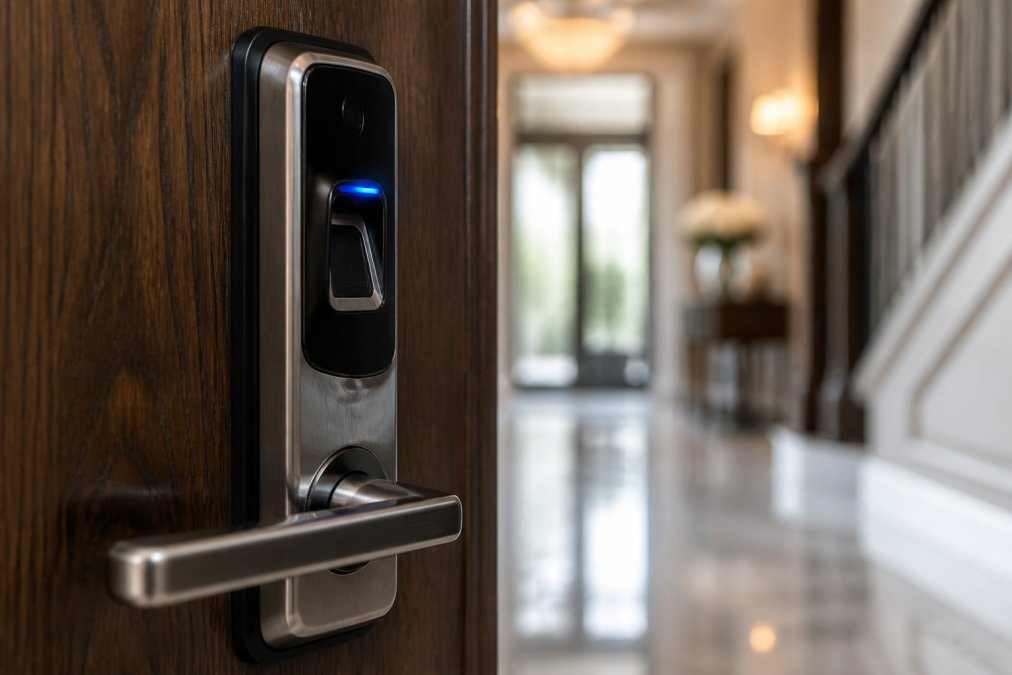
Biometric access control eliminates vulnerabilities of traditional keys and PIN codes. Fingerprint recognition, facial recognition, and multi-factor authentication ensure only authorised individuals enter and create an audit trail of every entry.
High-Definition CCTV and NVR Systems
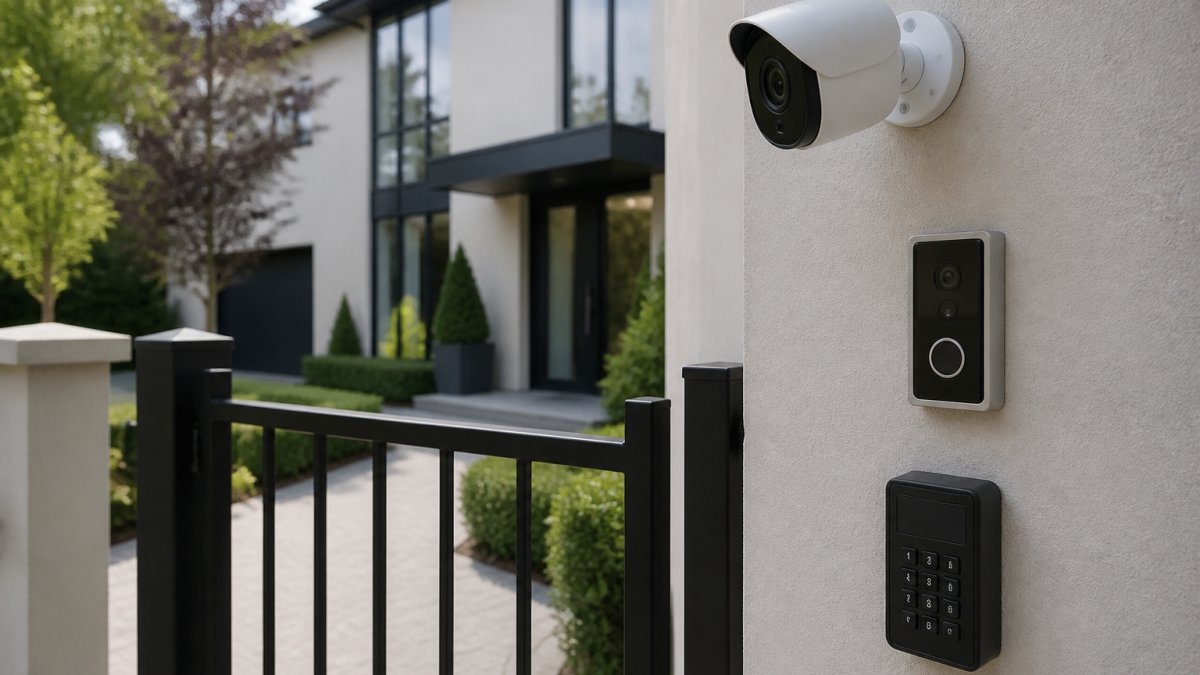
High-definition CCTV paired with Network Video Recorders (NVR) provides continuous surveillance with forensic-quality footage. Modern systems capture 4K resolution at 30 frames per second and integrate seamlessly with your smart home hub via standard networking infrastructure.
Remote Monitoring and Real-Time Notifications
Real-time notifications transform security from reactive to proactive. When motion is detected, a door is opened, or a window is broken, you receive an alert within seconds with video clips.
Smart Home Security Integration Pricing and Ownership Models
The cost of smart home security depends on whether you choose subscription-based professional monitoring or subscription-free local control. Each model has trade-offs.
Subscription-Free vs. Professional Monitoring
Subscription-free systems give you complete control and privacy with no monthly fees. The trade-off: you're responsible for responding to alerts and contacting local authorities.
| Model | Monthly Cost | Response Time | Data Privacy | Best For |
|---|---|---|---|---|
| Subscription-free | £0 | Self-managed | Complete local control | Owner-occupied properties with active monitoring |
| Professional monitoring | £15-40 | 2-5 minutes | Third-party access to alerts | Vacant properties, high-risk locations |
| Hybrid (local + backup) | £8-20 | Immediate + backup | Encrypted cloud backup | Properties requiring both privacy and redundancy |
Cost Factors and Budget Planning
System cost scales with property size and coverage area. A 2-bedroom townhouse might require 4-6 cameras and 2-3 biometric locks; a 5-bedroom country house might need 12-15 cameras, perimeter sensors, and GPS tracking.
BMS Security System Integration for Unified Control
Building Management Systems (BMS) coordinate HVAC, lighting, fire safety, and access control through a single interface. Integrating security into the BMS eliminates fragmented systems where alarms, cameras, and locks operate independently.
Interconnected Devices and System Coordination
When a break-in is detected, an integrated BMS triggers multiple responses simultaneously: lock down additional doors, activate lighting, record high-resolution video, and alert you with location-specific context.
Environmental Sensors and Perimeter Security
Environmental sensors detect water leaks, temperature extremes, and air quality issues. For high-value properties, these sensors protect against damage as much as theft.
Luxury Home Automation Standards and Compliance
Smart home security for high-value properties must meet UK building regulations, data protection requirements, and industry standards. Compliance isn't optional, it affects insurance coverage, property value, and legal liability.
Data Privacy and Encryption Standards
UK GDPR applies to any smart home system collecting personal data, including footage of visitors and service providers. Your system must encrypt data in transit and at rest, limit access to authorised users, and allow data subjects to request their information.
Cybersecurity Hardening for IoT Devices
IoT devices are common attack vectors. Compromised cameras become surveillance tools; hacked locks become entry points. Cybersecurity hardening reduces these risks.
Insurance Premium Reduction Through Smart Security
Insurance providers recognise that smart home security for high-value properties reduces claim frequency and severity. Many insurers offer premium reductions of 10-20% for systems meeting specific standards. Some require professional monitoring; others accept subscription-free systems if they meet technical specifications.
Integration with Existing Smart Home Systems
High-value properties often have existing smart home automation for lighting, climate, and entertainment. Smart home security must integrate seamlessly rather than operate as an isolated system.
Smart Lighting and Automated Responses
Smart lighting responds to security events. Motion outside activates perimeter lighting. Doors opened after hours illuminate hallways. Intrusions activate all lighting to deter intruders and provide visibility for emergency responders.
GPS Tracking for High-Value Assets
GPS tracking tags attach to portable high-value items and provide real-time location anywhere in the world. If jewellery or artwork is removed from the property, the system alerts you immediately and transmits location data.
Choosing the Right Smart Home Security Solution
Evaluating smart home security systems requires balancing technical capability, integration complexity, cost, and long-term support.
Key Evaluation Criteria
Scalability. Your system should expand as your property or needs change. Can you add cameras, sensors, and devices without replacing core infrastructure? Modular systems using standard protocols (BACnet, Modbus, Z-Wave) offer better long-term flexibility than proprietary systems.
Common Mistakes to Avoid
Over-reliance on single vendors. Proprietary systems lock you into one manufacturer for upgrades and repairs. If that vendor goes out of business or discontinues support, you're stranded. Open-standard systems using BACnet, Modbus, or standard networking protocols reduce this risk.
Frequently Asked Questions
What are the essential components of a smart home security system for high-value properties?
A comprehensive smart home security system includes biometric access control (fingerprint or facial recognition locks), high-definition CCTV with NVR storage, remote monitoring via smartphone integration, intrusion detection sensors, environmental monitoring, and real-time alerts. For high-value properties, systems should also feature GPS tracking for valuable assets, automated lighting responses, professional monitoring options, and encryption-protected data storage. Integration with existing smart home automation ensures seamless operation across all interconnected devices.
How does smart home security integration pricing vary for different property sizes?
Smart home security integration pricing depends on property size, number of entry points, camera coverage requirements, storage capacity, and whether you choose subscription-free or professional monitoring. Larger properties typically require more cameras, extended NVR storage, and complex system integration, increasing overall costs. Small residential buildings may use basic systems with local storage, while luxury estates need enterprise-grade solutions with cloud backup and advanced analytics. Contact BVI Building Services & Controls Ltd for a detailed quote tailored to your property's specific needs.
Can smart home security systems reduce property insurance premiums?
Yes, many insurers offer premium reductions for properties with professional-grade smart security systems. Insurers typically recognise systems featuring high-definition CCTV, professional monitoring, biometric access control, and intrusion detection as lower-risk. Discounts vary by insurer and system specification, ranging from 5% to 20% depending on coverage. Contact your insurer with details of your installed system, including NVR capabilities, camera resolution, and monitoring type, to confirm eligibility for premium reductions on your high-value property.
What is the difference between BMS security system integration and standalone smart locks?
BMS (Building Management System) security integration connects all security components, locks, cameras, sensors, and alerts, into one unified control platform. This allows coordinated responses, such as automatic lighting when motion is detected, or door locks engaging during alarm triggers. Standalone smart locks operate independently and don't communicate with other devices. BMS integration provides superior asset protection, faster emergency response, and simplified management across multi-zone properties, making it essential for high-value estates.
How do you ensure data privacy in a connected smart home security system?
Ensure data privacy by selecting systems with end-to-end encryption for all data transmission and storage. Use strong, unique passwords and enable two-factor authentication on all accounts. Choose providers offering local storage options (NVR systems) rather than mandatory cloud-only storage. Regularly update firmware and disable unnecessary remote access features. For luxury home automation standards compliance, verify that your provider meets current data protection requirements and conducts regular security audits. BVI Building Services & Controls Ltd can advise on privacy-first surveillance solutions tailored to your property.
What cybersecurity measures protect IoT devices in luxury home automation systems?
Protect IoT devices through network segmentation (isolating security devices on a separate network), regular firmware updates, strong encryption protocols, and disabling unnecessary features. Use a dedicated smart home hub with built-in firewall protection rather than connecting devices directly to your main network. Change default passwords immediately and monitor device activity for unauthorised access attempts. Professional security audits identify vulnerabilities in your system. BVI Building Services & Controls Ltd provides cybersecurity hardening advice during system design and installation.
Can smart home security systems work alongside existing building management systems?
Yes, modern smart home security systems integrate seamlessly with existing BEMS and BMS platforms. Integration allows security sensors to trigger automated responses, such as adjusting lighting, locking doors, or alerting facility managers, without replacing your current systems. Compatibility depends on your existing system's architecture and communication protocols. Professional integration eliminates the need for separate vendor management and ensures coordinated responses across all building systems. BVI Building Services & Controls Ltd specialises in bridging multiple trade systems for unified control and efficiency.
What maintenance is required for smart home security systems in high-value properties?
Maintain smart home security systems through regular firmware updates, monthly testing of cameras and sensors, quarterly review of access logs, and annual professional audits. NVR storage requires monitoring to ensure adequate space for continuous recording. Biometric sensors need occasional cleaning to maintain accuracy. Battery-powered devices require periodic battery replacement. Professional monitoring services should be reviewed annually for coverage gaps. Establish a maintenance schedule with your installer to prevent system failures and ensure continuous protection of your high-value property.