 How-to
7 Steps to Prevent HVAC Downtime in Facilities
Quick Summary
Preventing hvac downtime in facilities comes down to routine, planned maintenance carried out before anything fails. Build an equipment-specific checklist and calendar, rank systems by downtime risk, watch for early warning signs, and keep a written emergency response plan.
- Planned maintenance can be scheduled outside peak occupancy hours and parts can be ordered in advance.
- Build a commercial HVAC maintenance checklist covering every air handling unit, chiller, boiler, fan coil and split system on site.
- Score each system on impact, likelihood and replacement lead time to focus effort on the highest-risk plant.
- Filter differential pressure is often the cheapest and most useful first sensor for predictive maintenance.
- Test your emergency response plan once a year with a short tabletop exercise to find gaps early.
Table of Contents
- Why Preventive HVAC Maintenance Beats Reactive Repairs
- Step 1: Build a Commercial HVAC Maintenance Checklist
- Step 2: Set an Equipment-Specific Maintenance Calendar
- Step 3: Rank Systems by Downtime Risk
- Step 4: Recognise the Common Commercial HVAC Problems Early
- Step 5: Use Predictive Maintenance for HVAC Systems
- Step 6: Write an HVAC Emergency Response Plan
- Booking Your Facility's HVAC Review With BVI
- Frequently Asked Questions
Why Preventive HVAC Maintenance Beats Reactive Repairs
Last Updated: November 1, 2026
Unplanned HVAC failure is one of the costliest problems a facility can face.
Preventive maintenance means servicing equipment on a set schedule. Reactive maintenance means waiting for a breakdown and then repairing it. The gap between the two is large.
- Planned visits can be scheduled outside peak occupancy hours
- Parts can be ordered in advance rather than overnight
- Small faults are caught before they damage compressors or motors
Many facilities find that a mix of routine checks and condition monitoring keeps systems running. The rest of this guide sets out a practical way to do that.
Step 1: Build a Commercial HVAC Maintenance Checklist
A commercial HVAC maintenance checklist turns good intentions into repeatable work.
Start by listing every air handling unit, chiller, boiler, fan coil and split system on site. Then note the location, age, make and model of each.
- Inspect and clean or replace air filters
- Check and clean evaporator and condenser coils
- Clear condensate drains and test drain pans
Watch out: Checklists go stale. Review yours after every major repair or equipment change, or the new kit will be missing from the schedule.
Step 2: Set an Equipment-Specific Maintenance Calendar
A generic monthly visit does not suit every plant item. Filters on a busy air handling unit may need changing monthly, while a rooftop unit in a quiet store may need attention twice a year.
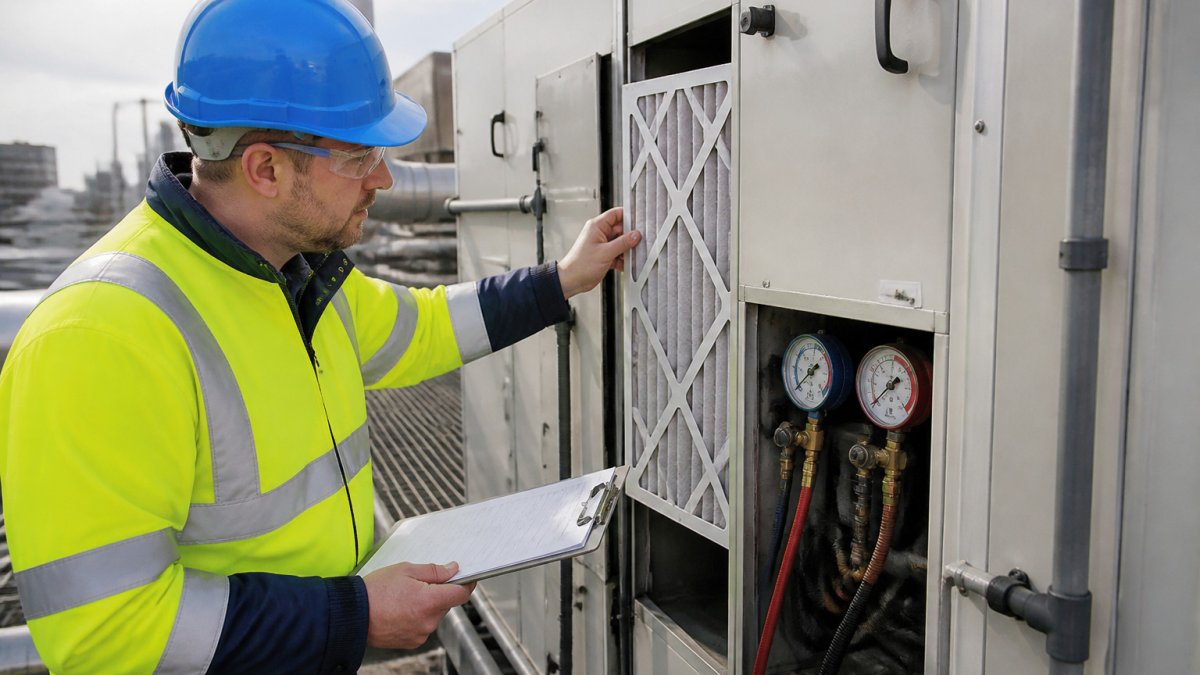
Use the table below as a starting template. Adjust frequencies to the manufacturer's instructions, the equipment's duty cycle and the site environment, a kitchen extract or a coastal site will need shorter intervals than a clean, lightly used office.
| Equipment | Monthly | Quarterly | Seasonal / Annual |
|---|---|---|---|
| Air handling units | Inspect and change filters; check drain pans and condensate traps; listen for belt or bearing noise | Clean coils; check belt tension and alignment; verify damper operation and actuator response | Deep-clean coils and drain lines before cooling season; check fan bearings and lubrication; verify control valve and sensor calibration |
| Chillers | Log supply and return temperatures, pressures and motor current; check for alarms | Check refrigerant charge and approach temperatures; inspect electrical connections and contactors | Annual oil and filter change where applicable; eddy-current test on tubes at intervals set by the supplier; condenser clean before peak load |
| Boilers | Check flue, water level and pressure readings; listen for kettling or unusual noise | Test safety devices and controls; check burner flame signal and combustion readings | Annual service and combustion analysis; clean heat exchanger; check expansion vessel charge and safety valve operation |
| Rooftop units | Change filters; clear condensate drains; check for water ingress | Clean condenser coils; check economiser dampers and actuators; inspect roof curb and seals | Pre-season cooling check; pre-season heating check; belt replacement and bearing inspection |
| Fan coil and split systems | Clean or replace filters; check drain trays and pumps | Clean coils; check fan operation and controls | Annual refrigerant and performance check; deep clean coils and drains |
Filters, coils and condensate drains
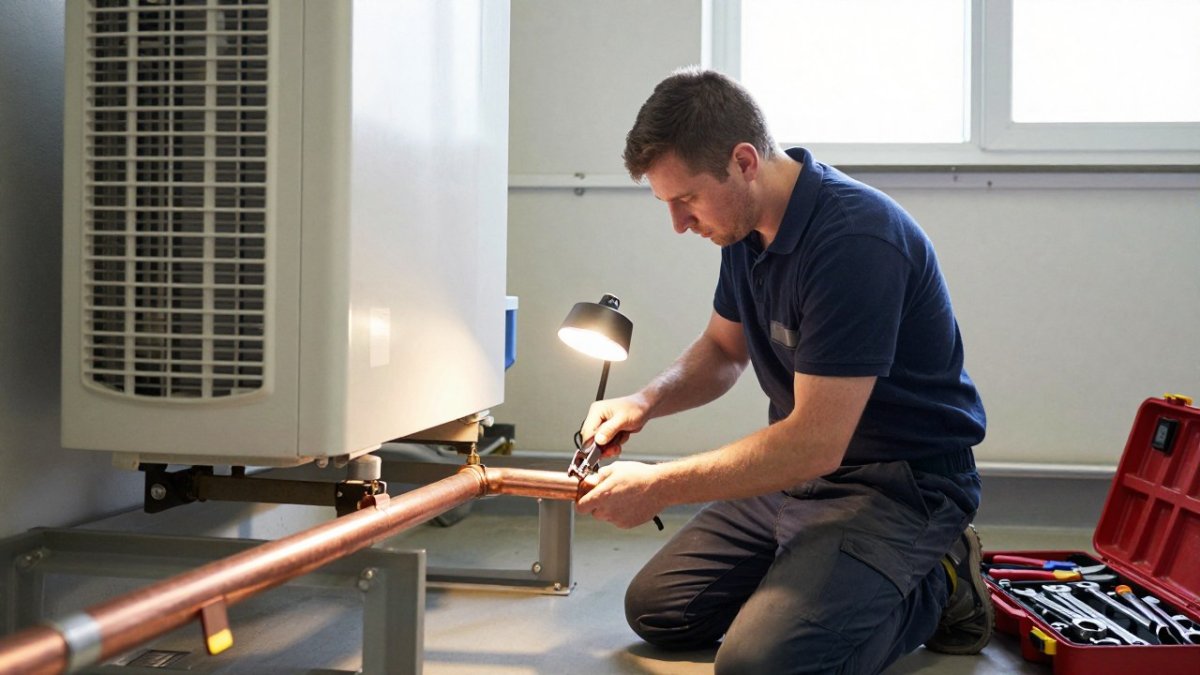
Filters and coils are where most performance is lost. Dirty filters raise fan energy use and strain motors. Fouled coils reduce heat transfer, and blocked condensate drains can cause water damage and microbial growth. Set these tasks on the shortest cycle your equipment needs, and log each visit. A common pattern is to shorten filter intervals during pollen season or on units serving kitchens and workshops, then return to the standard cycle afterwards.
Electrical checks, controls and refrigerant levels
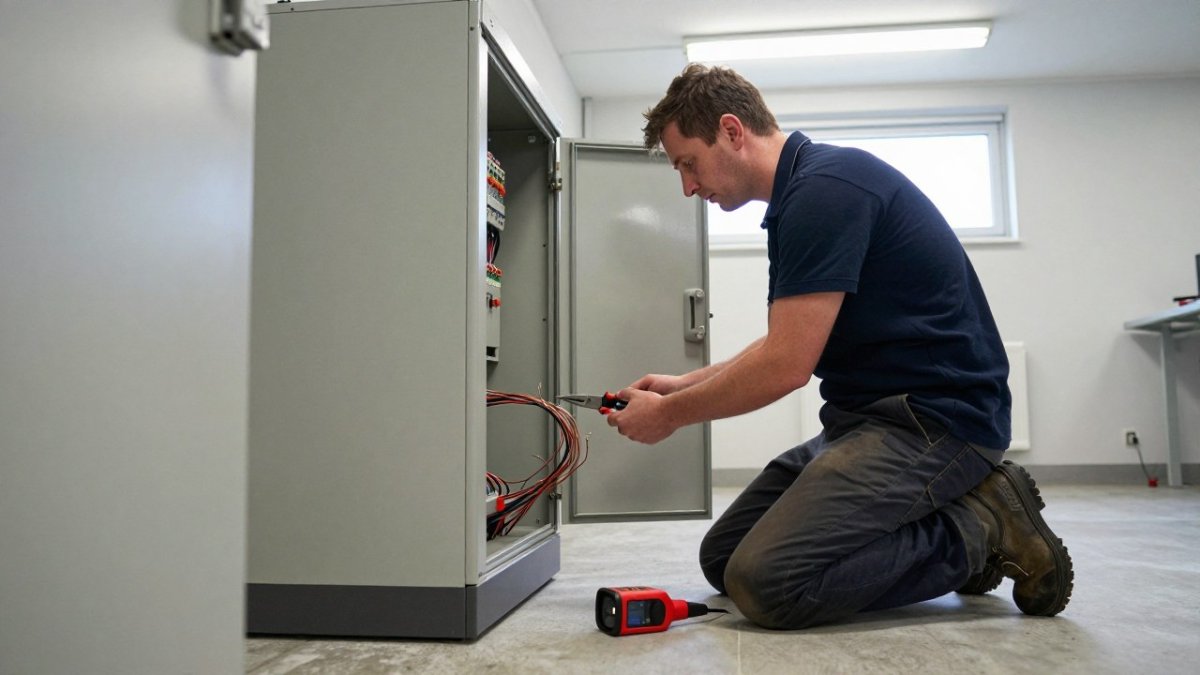
Loose electrical connections, worn contactors and faulty controls cause a large share of unexpected stoppages. Check terminals, test safety devices and confirm controls respond correctly. Refrigerant levels and system pressures should be checked at intervals set by the equipment supplier. Low charge can signal a leak, so treat any drop as a fault to investigate. Refrigerant leak checks and records may be required for stationary air-conditioning equipment under UK F-Gas rules; check the current requirements on the official government guidance before setting frequencies.
Seasonal servicing that prevents peak-load failures
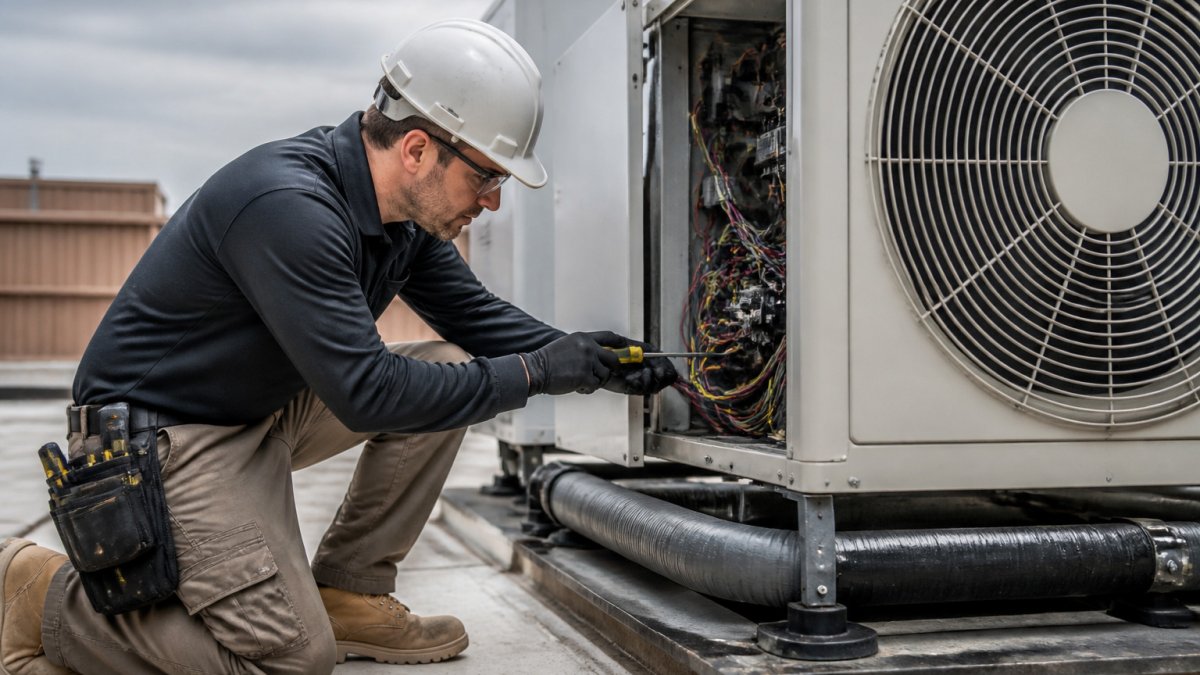
The most expensive downtime tends to happen on the hottest or coldest day of the year, when the plant is working hardest. Schedule pre-season checks so that cooling plant is proven before summer and heating plant before winter. A pre-season cooling check should include a full load run, confirmation that condensers are clean, and a review of control setpoints and time schedules.
Step 3: Rank Systems by Downtime Risk
Not every system needs the same attention. Ranking plant by downtime risk helps you put effort where a failure would hurt most.
Score each system on three simple factors:
- Impact: How much harm would a failure cause? Consider occupant comfort, product stock and critical processes.
- Likelihood: How old is it, and how often has it failed before?
- Replacement lead time: How long would a new part or unit take to arrive?
Systems that score high on all three should get the most frequent checks and the most spares planning. Low-risk items can stay on a longer cycle. This ranking also shows where a temporary cooling or heating plan would be needed if a critical unit fails.
Step 4: Recognise the Common Commercial HVAC Problems Early
Most breakdowns start with a small symptom. Training staff to spot these signs gives you time to act before a failure.
- Air temperatures drifting away from setpoint
- Unusual noise from fans, compressors or bearings
- Higher energy bills with no change in use
Make it easy for staff to report these issues. A simple log or ticket system works well. Early reports are often the cheapest faults to fix.
Step 5: Use Predictive Maintenance for HVAC Systems
Predictive maintenance uses data from sensors and controls to flag faults before they cause a stoppage. Instead of servicing on a fixed date only, you service when readings show wear or drift.
Choose the assets and the signals first
Start with the systems that scored highest in your downtime risk ranking. For each one, pick a small set of signals that map to known failure modes rather than instrumenting everything:
- Air handling units: supply and return air temperatures, filter differential pressure, fan motor current, belt condition via vibration
- Chillers: chilled water flow and temperature differential, condenser approach temperature, compressor current, refrigerant pressures
- Boilers: flue temperature, combustion readings, water pressure and flow, burner run hours
- Pumps and fans: vibration, bearing temperature, motor current
Filter differential pressure is often the cheapest and most useful first sensor: a rising trend tells you the filter is loading before airflow drops, so you can plan a change rather than react to a complaint.
Set thresholds that reflect normal operation
Fixed alarm limits copied from a datasheet generate nuisance alerts. Set thresholds from a baseline of normal operation for that specific unit, typically two to four weeks of logged data across different load conditions. Then use two tiers:
- Advisory: a sustained drift beyond the normal band, reviewed at the next weekly check.
- Action: a step change or a reading outside the safe operating envelope, triggering a work order.
Review thresholds after each season. A unit that has just been cleaned or had a belt changed will sit in a different normal band, and stale thresholds cause alert fatigue.
Integrate with the building management system
Most building management systems can trend the points you need and raise alarms without additional hardware. See our BMS solutions for continuous monitoring and automation for how this can be set up. Where a BMS is not present or cannot expose the data, stand-alone loggers and wireless sensors can fill the gap. The important step is to route alerts to a named person or team with a defined response time, not to a shared inbox nobody monitors.
Close the loop with the maintenance calendar
Predictive maintenance does not replace the calendar; it adjusts it. When a trend shows early wear, bring the relevant task forward. When a unit runs cleanly for several cycles, you may be able to extend the interval safely. Record every intervention against the asset so the next review can compare the prediction with what was actually found, that feedback is what turns sensor data into a reliable maintenance plan.
Step 6: Write an HVAC Emergency Response Plan
Even well-maintained systems fail eventually. A written emergency response plan shortens the time to restore comfort and limits the damage.
Your plan should cover:
- Who to call first, with out-of-hours contact details
- Which systems are critical and in what order to restore them
- Where temporary cooling or heating could be sourced at short notice
- How occupants and staff will be told about disruption
Test the plan once a year with a short tabletop exercise. Our guide to auditing building controls step by step can help you identify the controls that will support the plan. Gaps usually show up quickly.
Booking Your Facility's HVAC Review With BVI
If your facility has no written schedule, no ranking of risk and no emergency plan, a short review is a sensible first step. Review our air conditioning and heat pump services to see the HVAC support on offer. Explore BVI's electrical, plumbing and maintenance services to see what support is available for your building. You can contact BVI Controls to discuss your facility's needs.
Frequently Asked Questions
How can facilities prevent HVAC system downtime?
Prevent downtime by combining scheduled servicing with early fault detection. Start with a written maintenance plan, replace air filters on a fixed interval, keep condensate drains clear, and check electrical connections and controls at each visit. Rank critical plant so the most important systems get priority attention. Log every work order so patterns become visible, and use building management system alarms to catch faults before equipment stops. Pricing for servicing depends on system size, access and frequency, so request a quote from BVI for a site-specific figure.
How often should commercial HVAC equipment be serviced?
Service frequency depends on the equipment type, operating hours and the environment it runs in. Air filters often need checking monthly in dusty or high-occupancy buildings, while full plant inspections are commonly scheduled quarterly or twice yearly. Critical systems serving clean rooms, data spaces or healthcare areas may need more frequent attention. Base your intervals on manufacturer guidance, your maintenance records and any compliance requirements that apply to your building. A written schedule makes it easier to justify the frequency to budget holders.
How can predictive maintenance help prevent HVAC failures?
Predictive maintenance uses sensor data from a building management system to spot trends before a failure occurs. Rising compressor current, unusual supply air temperatures, or a filter pressure drop that climbs faster than normal can all signal wear. By acting on these readings during planned visits, facilities teams avoid emergency call-outs and unplanned shutdowns. The approach works best when sensors are calibrated and alarm thresholds are set for each piece of plant rather than left at defaults.
What should a facility team do when an HVAC system fails?
Start with safety and occupant comfort: isolate the affected plant, check whether a standby unit can take over, and inform building users. Record the time, symptoms and any alarms, then contact the contractor named in your emergency response plan. Keep spare filters, contact details and basic isolation instructions readily available. Once the immediate issue is resolved, review the cause and update the maintenance schedule so the same fault is caught earlier next time.