 How-to
7 Training Routes for Multi-Skilled MEP Technicians
Last Updated: November 7, 2026
Quick Summary
MEP technician training follows three steps: audit your current skills against the role, choose a training format that matches your gap, then build a portfolio of logged jobs as evidence of competence. Formats include short skills courses, part-time qualifications, apprenticeships and conversion courses, and you should confirm each course's awarding body, RQF level and assessment method before booking.
- Short skills courses cover one skill in one week, ideal for topping up a single gap.
- Ask any provider which awarding body certifies the course and what its RQF level is.
- A competency card proves on-site assessment but does not replace a qualification.
- Rate technicians 1 to 4 on a skills matrix and keep it updated after every course.
- Assess return by comparing subcontracted callout costs against the fully loaded training cost.
Table of Contents
- Why Multi-Skilled MEP Technicians Are in Demand
- A Step-by-Step Route Through MEP Technician Training
- Multi-Skilled Engineering Courses: What Each Format Delivers
- Building Services Engineering Qualifications and What They Prove
- Building a Multi-Skilled Technician Skills Matrix
- MEP coordination best practices for newly multi-skilled teams
- Costs, Funding and Assessing Return on Training
- Planning Your Team's Training with BVI
- Frequently Asked Questions
Why Multi-Skilled MEP Technicians Are in Demand
A multi-skilled MEP technician is a building services professional trained to work across mechanical, electrical and plumbing systems rather than a single trade. Demand for these roles keeps growing because buildings now run on connected systems, and no single trade can service them alone. This MEP technician training guide from BVI Building Services & Controls Ltd sets out seven training routes that take someone from one trade to genuine multi-skilled competence.
The pressure comes from how buildings are now built and run. Heat pumps, BEMS controls, air conditioning and electrical distribution all interact. When a fault crosses trades, a fragmented team spends more time coordinating than fixing. Integrated firms avoid that waste, which is why the Construction Industry Training Board tracks steady demand for cross-skilled engineering maintenance staff.
Someone who can fault-find across systems is worth more than two specialists who hand work back and forth.
A Step-by-Step Route Through MEP Technician Training
Most people pick a course first and work out the gaps later. Do it the other way round. Audit, then train, then prove it.
Step 1: Audit Current Skills Against the Role
List what you already do confidently and what you avoid. Be honest about the second list. A plumber who can wire a pump but not test a circuit has a clear gap. Map your skills against the job you want, not the one you have.
Step 2: Choose the Training Format and Provider
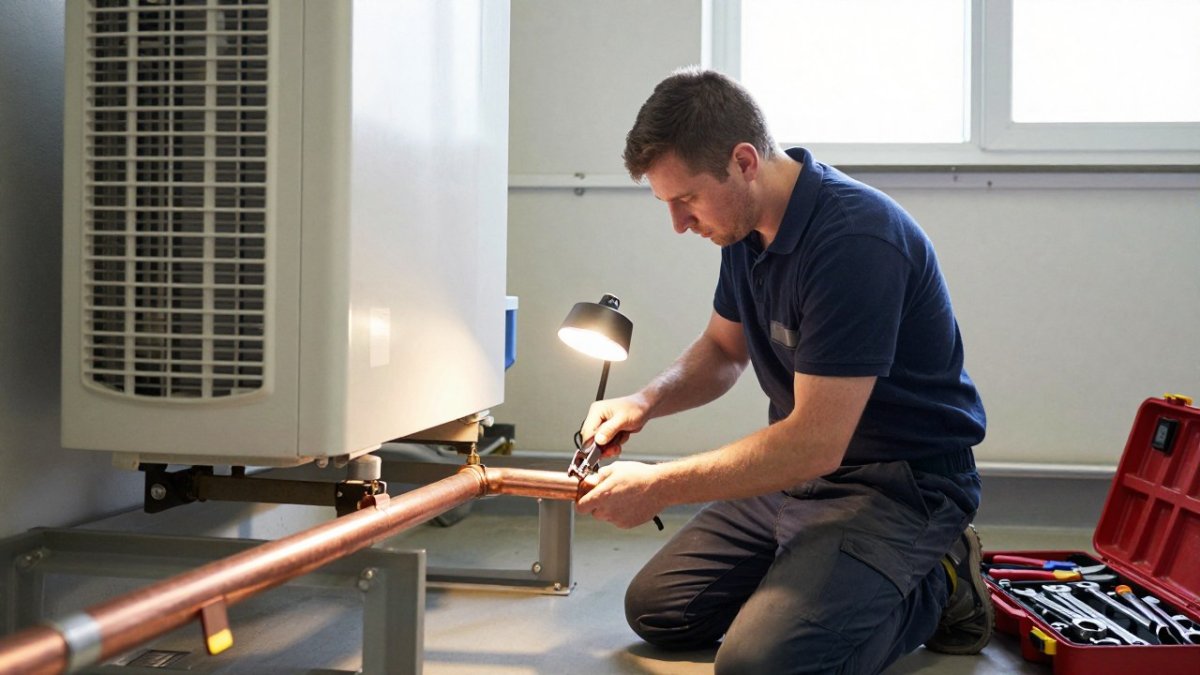
Match the format to the gap. Short courses suit one specific skill. Full qualifications suit a career change. Day release suits people already employed. Before you commit, look at the services we deliver to see the real mix of plumbing, electrical, gas, air conditioning and heat pump work a multi-skilled role involves.
Step 3: Build Evidence of Competence
Certificates prove attendance. Evidence proves competence. Keep a log of jobs completed, systems worked on and faults solved. Employers and assessors want to see what you have actually done, not just what you have studied.
| Step | What You Do | Time Needed | Output |
|---|---|---|---|
| 1. Audit | List confident skills and gaps | 1-2 hours | Written skills list |
| 2. Choose | Match format to gap, vet provider | 1-2 weeks | Course booked |
| 3. Evidence | Log jobs, faults and systems | Ongoing | Competence portfolio |
Multi-Skilled Engineering Courses: What Each Format Delivers
Course formats differ far more in outcome than in content. Pick by where you need to end up.
- Short skills courses: one skill, one week. Good for topping up a single gap.
- Part-time qualifications: evening or day release over months. Good for employed technicians.
- Apprenticeships: multi-year, work-based. Good for new entrants.
- Conversion courses: mechanical-to-electrical or the reverse. Good for experienced tradespeople.
A common mistake is booking a broad course when a single focused one would close the gap faster. The other trap is collecting certificates with no workplace evidence behind them. Providers rarely tell you that assessors weight logged experience far above course completion.
Building Services Engineering Qualifications and What They Prove
Qualifications prove different things, and employers know the difference. A level 2 award shows foundational knowledge. A level 3 diploma shows depth. A competency card shows you have been assessed on site. None of them proves you can fault-find under pressure, which is why the evidence portfolio from Step 3 matters so much.
The practical problem is that the same words appear on very different certificates. Two courses can both say "level 3 electrical" and mean entirely different things: one may be a knowledge-only award with no practical assessment, the other a competence-based qualification requiring supervised workplace evidence.
First, which awarding body certifies the course? Recognised bodies in this space include several established awarding organisations, and you should confirm any body's current status directly. Second, what does the certificate actually cover? Third, is the qualification on the Regulated Qualifications Framework (RQF)?
Competency cards deserve separate treatment because they are often confused with qualifications. A card such as a CSCS card or a trade-specific competence card proves you have been assessed against a scheme's criteria, usually including a health and safety test and evidence of experience.
Watch out: some short courses issue in-house certificates that carry little weight with employers or insurers. If a provider cannot name the awarding body, the RQF level and the assessment method in writing before you book, assume the certificate is internal only.
For multi-skilled roles specifically, look for qualifications that combine more than one trade. A single-trade level 3 in electrical installation proves electrical depth but says nothing about plumbing or HVAC.
Finally, verify recognition directly. Ask two or three employers in your target sector which qualifications they actually shortlist on, and check the awarding body's own register to confirm the centre and course are approved. That ten-minute check is worth more than any brochure claim.
Building a Multi-Skilled Technician Skills Matrix
A skills matrix turns a vague ambition into a training plan. List every system in the buildings you work on down one side. List each technician across the top. Rate each person from 1 to 4: unaware, trained, practised, or able to teach it. The gaps become your training brief.

The man is British.
Keep the matrix live. Update it after every course and every new system commissioned. A matrix built once and filed away tells you nothing about today's team.
MEP coordination best practices for newly multi-skilled teams
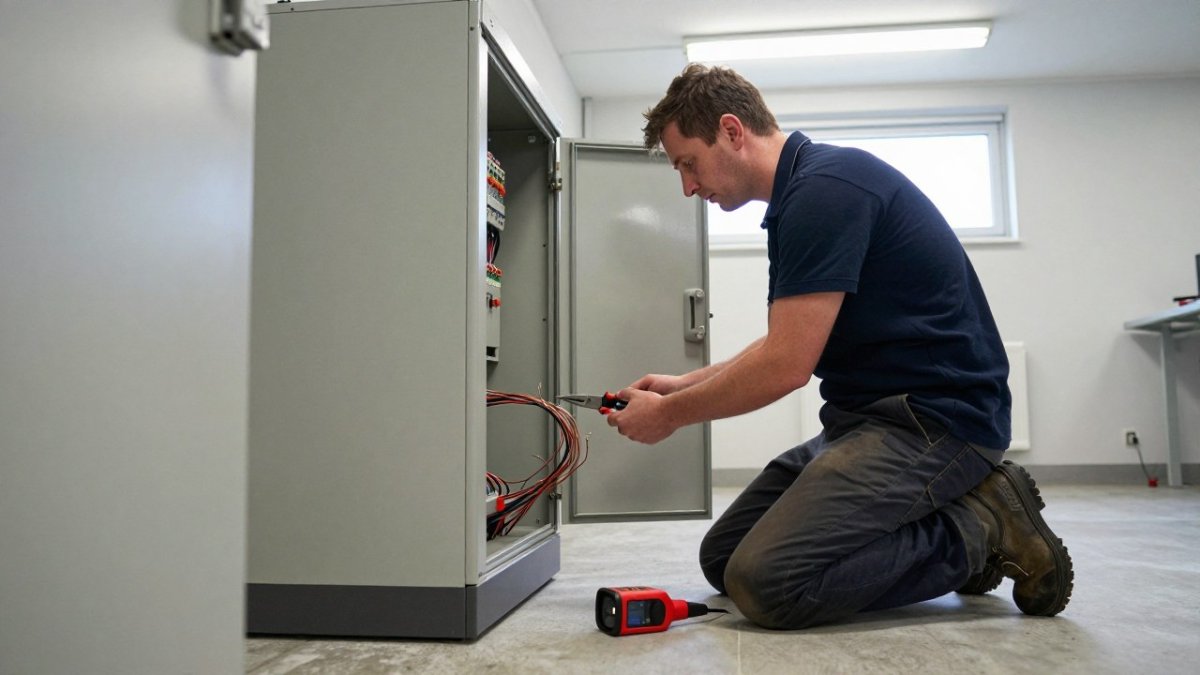
Coordination is where newly cross-skilled teams either deliver or unravel. Set clear rules before the first joint job. Agree who signs off electrical work, who commissions controls, and who holds the test results. Write it down.
Coordinating trades on live projects points to three habits that matter most:
- One point of contact per project, not one per trade
- Shared commissioning checklists across mechanical and electrical
- A short joint handover walk before any system goes live
For the detailed sequence, read our guide to integrated plumbing and electrical coordination. And if your team still needs convincing that coordination is worth the effort, the case for why building trades coordination matters makes it plainly.
Costs, Funding and Assessing Return on Training
Training costs vary by format, provider and level, so get quotes rather than estimates. But a quote is only useful if you know what it includes and which funding route can reduce it. Most course listings give a headline price and nothing else, which is why this section sets out the questions to ask and the funding levers to pull.
Start with what the fee covers. A short skills course price may include tuition, assessment and certification, or it may exclude the certification fee, PPE, consumables and the assessment resit charge. Ask for a written breakdown covering: tuition hours, practical workshop time, assessment and certification fees, any required textbooks or tools, and the cost of a resit if you fail an assessment. A course that looks cheaper per day can cost more once resit and certification fees are added.
Funding is the bigger lever, and it splits into three routes worth checking.
- Apprenticeship funding: for new entrants and some existing staff, apprenticeship levy funding and government co-investment can cover a substantial share of training costs. Eligibility depends on the apprentice's age, prior qualifications and the employer's levy status, so check the current rules with the UK government apprenticeship service before budgeting.
- Adult skills funding: adults without certain prior qualifications may qualify for free or co-funded courses through the adult education budget, often delivered via further education colleges. Availability varies by provider and region, so ask the college directly rather than assuming.
- Employer sponsorship: many building services firms will part-fund or fully fund cross-skilling for existing technicians because the alternative, recruiting a multi-skilled technician on the open market, is usually more expensive. Make the business case in terms of work brought in-house rather than course price.
Assess return by the work you stop outsourcing. If a multi-skilled technician can service a heat pump, test a circuit and clear a blocked condensate line in one visit, you cut callout fees and downtime together. A simple way to frame it: list the jobs currently subcontracted over a typical month, estimate the callout and labour cost of each, and compare that annual figure against the fully loaded cost of training, course fees plus the technician's time off the tools.
Watch out: funding rules and eligibility change, and a provider's claim that a course is "funded" may mean partially funded or funded only for certain learners. Confirm the actual contribution in writing before you commit.
For a team plan, sequence the spend. Fund the gap that unlocks the most in-house work first, and use the savings from that to fund the next gap.
Planning Your Team's Training with BVI
Start with the skills matrix, not a course brochure. Once you know the gaps, the training route picks itself. BVI works across plumbing, electrical, air conditioning and heat pump systems, and can help you map which skills your people need first. To talk through your team's plan, contact us and we will point you to the right starting point.
The hardest part is not choosing a course. It is admitting which skills your team lacks. BVI Building Services & Controls Ltd bridges the gap between trades, coordinating plumbing, electrical, air conditioning and heat pump work under one accredited team so projects avoid the delays and rising costs of fragmented contractors. Get started with BVI Building Services & Controls Ltd and build a team that fixes the whole system, not half of it.
Frequently Asked Questions
What training does a multi-skilled MEP technician need?
Most start with a core mechanical or electrical qualification, then add the other disciplines through short courses and supervised site work. A typical route covers mechanical and electrical skills, plumbing and building-services fundamentals, HVAC and refrigeration systems, and health and safety procedures. Fault-finding and troubleshooting are usually taught on real equipment rather than in a classroom. Employers should map each technician against a skills matrix so gaps are visible, and record assessment evidence for every trade they are asked to work in unsupervised.
How long does multi-skilled engineering training take?
It depends on the starting point. A qualified electrician adding mechanical and plumbing competence through part-time multi-skilled engineering courses may need several months of study plus site experience. An apprentice starting from scratch typically needs three to four years to reach full competency across trades. Short courses in HVAC, refrigeration or controls can take days to weeks but only certify that specific skill. Ask any provider how much hands-on training is included, because course duration alone tells you little about how competent someone will be afterwards.
Do MEP technicians need separate qualifications for electrical, plumbing and HVAC work?
Yes, in practice. Electrical work is governed by the Wiring Regulations, and gas work must be carried out by a Gas Safe registered engineer. Refrigerant handling carries its own certification requirements. Plumbing has fewer statutory barriers but still needs evidence of competence for insurance and warranty purposes. Building services engineering qualifications should be checked trade by trade, and the assessment methods behind each one confirmed before you rely on them.
How can employers assess a technician's competence across multiple trades?
Use a multi-skilled technician skills matrix that lists each task against a competence level, from awareness to independent working. Populate it with evidence: observed assessments, completed job records, fault-finding logs and certification. Review it at least annually and after any new training. This also supports MEP coordination best practices, because you can see who is cleared to isolate, install or commission each service before work starts. It gives facility managers a defensible record if a contractor's competence is ever questioned.