
 blog
blog
Integrated vs Fragmented Building Services: Which Approach Wins
Table of Contents
- What Integrated Building Services Actually Mean
- The Impact of Fragmentation in Construction Projects
- MEP Coordination Best Practices for Seamless Delivery
- M&E Contractor Responsibilities in Integrated Systems
- Real Cost Implications: Where Your Budget Actually Goes
- Why Integrated Building Services Outperform Fragmented Approaches
- Making the Transition: From Fragmented to Integrated
- Frequently Asked Questions
Last Updated: September 28, 2026
What Integrated Building Services Actually Mean
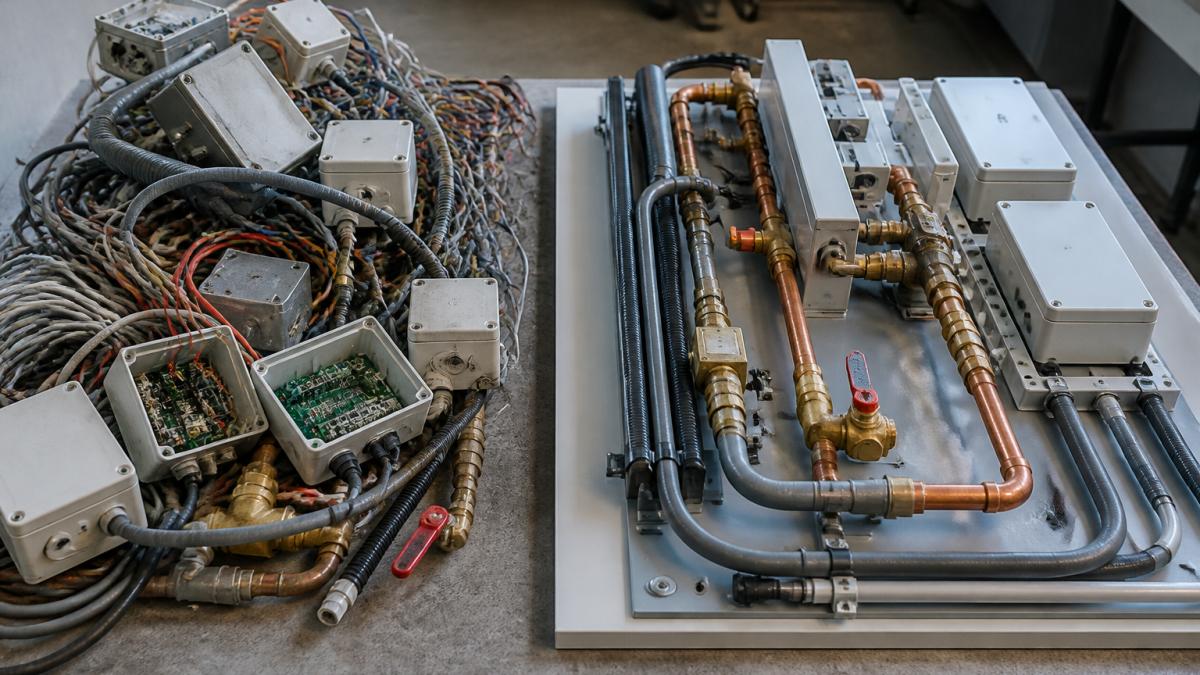
Integrated building services means coordinating all mechanical, electrical, plumbing, and building automation systems under unified management from the start of a project, in contrast to integrated vs fragmented building services approaches where fragmentation leaves trades working independently. Rather than hiring separate contractors who work independently, integrated delivery brings trades together with shared goals, aligned schedules, and real-time communication.
The distinction between integrated vs fragmented building services becomes clear when trades arrive uncoordinated and compete for space and time. One team's routing conflicts with another's installation, schedules slip, and costs climb. An integrated approach eliminates this friction by treating the building as a single system where every trade understands how their work affects the others.
Teams using integrated delivery report faster completion timelines, fewer rework cycles, and systems that perform as designed. Integration builds structural efficiency into the project from day one.
The Impact of Fragmentation in Construction Projects
Fragmented workflows create predictable problems that cascade through the project. Data silos between contractors mean nobody has a complete picture of what's happening on site.
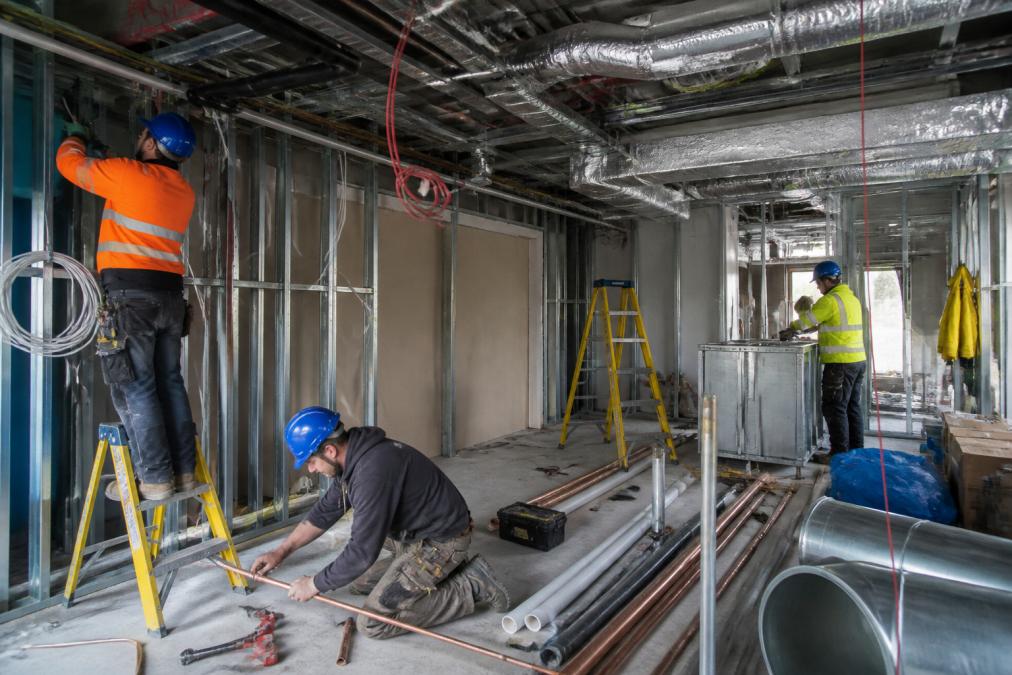
The electrical contractor runs conduit through ceiling joists. Two weeks later, the HVAC team needs that space for ductwork. The mechanical system gets rerouted, adding days and hundreds in materials. The plumber adds another week to avoid unpredicted conflicts.
Contractual fragmentation means no single entity is accountable for the overall outcome. When something goes wrong, blame shifts between contractors. When systems don't integrate, nobody owns the solution.
The real cost is inefficiency baked into every decision. Each contractor optimizes for their trade, not the building. Energy consumption stays higher because HVAC and lighting systems weren't designed together.
MEP Coordination Best Practices for Seamless Delivery
MEP coordination requires structured processes starting during design. Building Information Modeling (BIM) identifies spatial conflicts before construction begins.
Early clash detection prevents expensive field discoveries. When 3D models overlay all MEP systems, conflicts appear immediately. A beam blocking a duct run becomes visible during design, not after fabrication. Rerouting costs pennies in design time instead of thousands in materials and labour.
Shared project management systems create transparency. Every contractor sees updated schedules and sequencing decisions. When one trade falls behind, others adjust rather than discovering delays on site.
Weekly coordination meetings keep teams aligned. These problem-solving sessions address conflicts together. A plumber might identify routing that works better for electrical conduit. An HVAC technician might suggest duct placement that gives structural engineers flexibility. Collaboration generates solutions individual contractors would never find.
Define clear responsibility boundaries upfront: who owns coordination, resolves conflicts, and manages changes. This minimizes disputes and accelerates decisions.
M&E Contractor Responsibilities in Integrated Systems
In integrated delivery, M&E contractors are accountable for ensuring systems work together and meet the building's overall performance targets, not just installing their individual trades correctly.
Contractors must understand how their decisions affect other trades. An electrical contractor's cable routing affects space for plumbing. An HVAC technician's ductwork size influences structural loads. In integrated delivery, these consequences are part of the contractor's scope.
Integrated contractors verify their systems work with other trades' systems, not just in isolation. They test sequences, sensor calibration, and control logic to catch integration problems before occupancy.
When spatial conflicts emerge, integrated contractors work with other trades to find the best solution for the building. That collaborative mindset produces better outcomes than the adversarial approach common in fragmented projects.
Real Cost Implications: Where Your Budget Actually Goes
Budget overruns in fragmented projects follow predictable patterns: rework from spatial conflicts discovered during construction, material waste from rerouting, and schedule delays multiplying costs through extended overhead.
Rework and Spatial Conflict Costs Fragmented projects discover 40-60% of MEP conflicts during construction rather than design. Each costs 5-8 times more to resolve on site than in design. A 15,000 m² project with 8-12 major conflicts incurs £28,000-£72,000 in preventable rework. Integrated coordination reduces conflicts to 1-2, saving £21,000-£60,000.
Schedule Delay Costs Fragmented workflows extend timelines by 12-18%.
Why Integrated Building Services Outperform Fragmented Approaches
Integrated buildings consume less energy, require fewer emergency repairs, and maintain stable environmental conditions because systems work together rather than fighting each other.
Making the Transition: From Fragmented to Integrated
Transition to integrated delivery requires changes to project structure, contracting, and team composition. It's about fundamentally shifting how trades relate to each other and the project outcome.
Structural and Contractual Foundations
Software Stack Integration Roadmap
-
BIM as the Central Coordination Hub: Establish a shared BIM model (IFC format) containing all MEP systems, structural elements, and geometry. Assign a BIM coordinator for model maintenance and clash detection. Update weekly and clash-check against 50-100 mm tolerance for MEP systems.
-
Project Management Integration: Connect BIM to project management software (Microsoft Project, Asana, Primavera P6) through scheduled exports. When conflicts are resolved in BIM, update the construction schedule. Manual weekly integration eliminates data lag that causes fragmented projects to discover conflicts weeks after design decisions.
-
ERP and Procurement Linkage: Connect material take-offs from the BIM model to ERP systems (SAP, Oracle, or construction-specific platforms like Touchplan) to automate procurement and cost tracking. When ductwork routing changes in BIM, the material list updates automatically, triggering procurement adjustments. This prevents the scenario where fragmented projects order materials based on outdated designs, then discover conflicts that require reordering.
-
Field Data Capture: Use mobile applications (Touchplan, Fieldwire, or Procore) to capture as-built conditions on site and compare them against the BIM model. When actual installation deviates from planned routing, field teams flag the deviation immediately, allowing coordination adjustments before dependent trades arrive. This real-time feedback loop is the primary advantage integrated projects have over fragmented ones.
Implementation Sequencing
- Phase 1 (Weeks 1-4): Establish the shared BIM model and assign a BIM coordinator. Conduct initial clash detection. This phase requires minimal software investment and immediately identifies design-phase conflicts.
- Phase 2 (Weeks 5-8): Connect project management software to BIM. Update the construction schedule based on clash detection results. Establish weekly coordination meeting protocols.
- Phase 3 (Weeks 9-12): Integrate ERP and procurement systems. Automate material take-offs from the BIM model. This phase prevents procurement-driven conflicts.
- Phase 4 (Construction Phase): Deploy field data capture tools. Train site teams to flag deviations from the BIM model in real time.
Risk Mitigation Through Integration
- Responsibility Clarity: When all trades design in a shared model, responsibility for conflicts becomes clear. If an electrical contractor's conduit routing conflicts with a plumber's main line, the BIM model shows who made the decision and when. This clarity reduces disputes about who caused the problem and who pays for the fix.
- Change Order Reduction: Fragmented projects accumulate change orders because trades discover conflicts during construction and blame each other. Integrated projects, with conflicts resolved during design, have fewer change orders and clearer justification for those that do occur.
- Performance Warranties: Integrated contractors can warrant that their systems work together because they were designed together. Fragmented contractors warrant only their individual trade, leaving the building owner responsible for integration failures. Integrated delivery shifts that liability to contractors who can actually control it.
For Mid-Project Transitions
- Audits completed work against design intent
- Creates an as-built BIM model reflecting actual installations
- Identifies conflicts between completed and planned work
- Establishes revised sequencing for remaining trades
- Establishes weekly coordination meetings for the remainder of the project
Frequently Asked Questions
What are the primary differences between integrated and fragmented building services?
Integrated building services unite mechanical, electrical, and plumbing (MEP) work under coordinated management, with shared timelines, communication protocols, and unified design specifications. Fragmented services involve separate contractors working independently, often with conflicting schedules and minimal coordination. Integrated approaches reduce rework, prevent cost overruns, and ensure systems function cohesively. Fragmented delivery typically causes delays, budget creep, and performance issues due to misaligned installations and poor interoperability between trades.
How does MEP coordination best practices prevent project delays?
Effective MEP coordination establishes clear communication channels, synchronised scheduling, and clash detection before work begins. When mechanical, electrical, and plumbing systems are planned together, conflicts are identified and resolved on paper rather than on site. This prevents costly rework, reduces idle time waiting for other trades, and keeps projects on schedule. Shared data systems and regular coordination meetings ensure all trades understand dependencies and can work in sequence without bottlenecks.
What happens when building services remain fragmented?
Fragmented building services create data silos where each contractor operates independently, leading to clashes between systems, duplicated work, and inefficiency. Communication gaps cause scheduling conflicts, with trades arriving unprepared or unable to proceed because other work isn't finished. Projects routinely exceed timelines and budgets by 20-40% due to rework and coordination failures. Energy efficiency suffers because HVAC, electrical, and control systems aren't optimised to work together, and long-term maintenance becomes costly when no single party understands the integrated whole.
Can integrated building services work on mid-stage projects?
Yes, integrated coordination can be introduced at any project phase, though earlier integration delivers greater savings. If trades are already on site, an integrated coordinator can still streamline remaining work by establishing unified communication, identifying and resolving clashes, and aligning remaining schedules. The later the intervention, the smaller the efficiency gains, but preventing further fragmentation and rework still delivers measurable cost and timeline benefits. The key is appointing a single point of contact with authority to coordinate all trades immediately.