 blog
Cost of Integrated Building Management Systems in the UK
Quick Summary
An integrated building management system typically costs more upfront than standalone controls, and the price depends on what is integrated, the building type and its size. Planning ranges run from £40,000 for a small office to £700,000 or more for a large healthcare or laboratory site. Ongoing costs are usually 8-15% of capital per year.
- Planning ranges run from £40,000 for a small office to £700,000+ for healthcare or laboratory sites.
- Hardware and field devices usually make up around 40-55% of a capital quote.
- Recurring costs usually run at 8-15% of the capital cost per year.
- Protocol compatibility with older plant can require gateways, adding cost before systems can connect.
- Compare integrated and standalone options over the same scope and period, not one subsystem against a full package.
Table of Contents
- What an Integrated Building Management System Includes
- Itemised Upfront Costs: Hardware, Software, Services and Installation
- Integrated Versus Standalone Systems: A Like-for-Like Comparison
- Ongoing Costs, Lifecycle Cost and Total Cost of Ownership
- Energy Savings, ROI and Payback Period
- The Benefits of Integrated Building Services Beyond Cost
- Planning Your Next Step: Requesting a Costed Survey From BVI
- Frequently Asked Questions
What an Integrated Building Management System Includes
An integrated building management system (BMS) connects separate control systems in a building. The systems included depend on the project scope.
This matters for cost because the price depends heavily on what gets integrated.
How integrated systems work across HVAC, lighting and access control
Protocol compatibility is the main technical hurdle. Older plant may use proprietary protocols, which means gateways or interface modules are needed before the systems can talk. This is one of the cost items that tends to surprise buyers, and it is worth asking any supplier how they handle legacy equipment before signing off a scope.
Itemised Upfront Costs: Hardware, Software, Services and Installation
As a planning rule, hardware and field devices typically account for around 40-55% of a capital quote, software and licences around 10-20%, engineering and integration around 15-25%, and installation and commissioning around 15-25%. These proportions shift with building type and retrofit condition, so treat them as a sense-check rather than a price list.
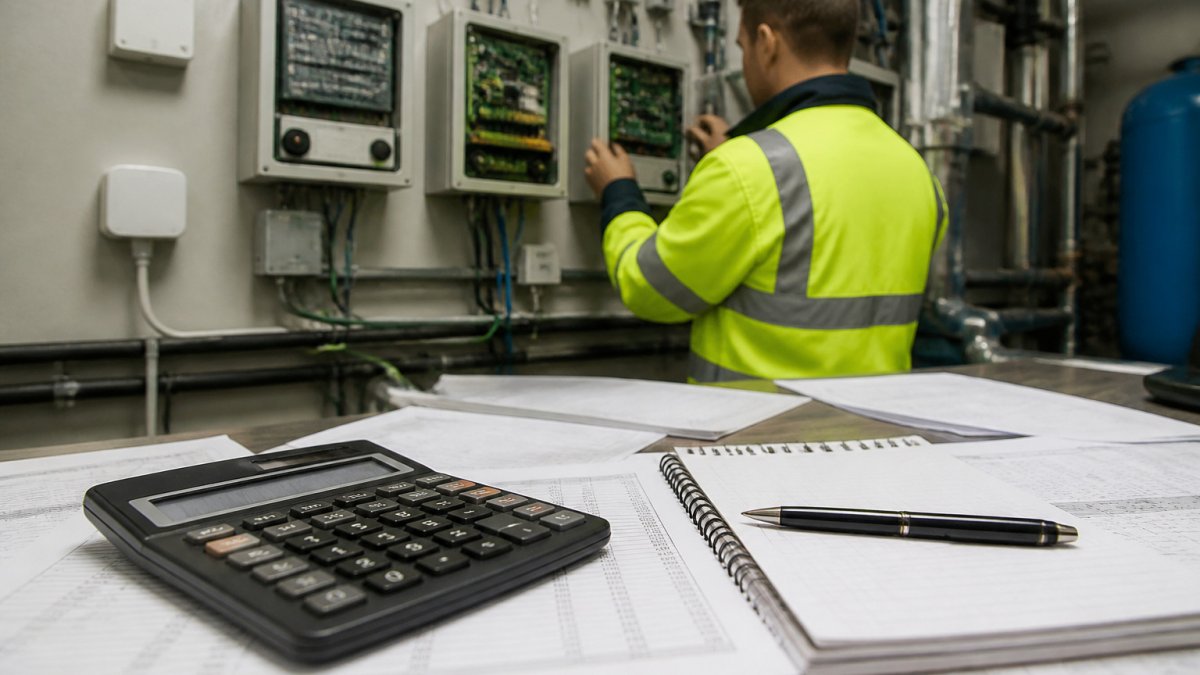
Typical cost ranges by building size and type
| Building type | Indicative point count | Planning range (GBP, capital) | Main cost drivers |
|---|---|---|---|
| Small office, 500-1,000 m² | 150-300 | £40,000-£90,000 | Controller count, zone sensors, single front-end |
| Mid-size office, 1,000-3,000 m² | 300-800 | £90,000-£220,000 | Metering per floor, analytics, tenant reporting |
| School or college | 400-900 | £110,000-£250,000 | After-hours scheduling, access integration, phased works |
| Healthcare or laboratory | 800-2,000+ | £250,000-£700,000+ | Resilience, validation, strict environmental control |
| Industrial or warehouse | 200-600 | £60,000-£180,000 | Long cable runs, harsh-environment devices, limited zones |
| Multi-site portfolio | Varies per site | £150,000-£500,000+ per site | Common front-end, standardisation, wide-area networking |
Pricing depends on quantity, dates and delivery, so no fixed figure applies across projects. Request an itemised quote from any supplier, including BVI Building Services & Controls Ltd, through the contact route at the end of this article.
Integrated Versus Standalone Systems: A Like-for-Like Comparison
A standalone control system runs one service, such as a heating controller, on its own. It is cheaper to buy, but each system needs separate monitoring, maintenance contracts and operator training. Over several years those duplicated costs add up.
An integrated system costs more at the start but usually reduces ongoing effort. One supplier, one support contact and one set of operating procedures replace several. The fair comparison is therefore over the same scope and the same period, not the cheapest quote for one subsystem against the full package.
Ongoing Costs, Lifecycle Cost and Total Cost of Ownership
Total cost of ownership (TCO) adds the upfront cost to everything you pay over the system's working life. For building controls, the recurring lines are software support and licence renewals, remote monitoring, periodic sensor recalibration, firmware and security updates, spares, staff time and eventual replacement. A common planning assumption is that recurring costs run at 8-15% of the capital cost per year, with the upper end applying to heavily integrated, multi-site or compliance-critical estates.
A simple TCO model you can apply to any quote
| Cost line | Typical basis | Planning assumption |
|---|---|---|
| Software support and licences | Annual, per point or per user | 1-3% of capital per year |
| Remote monitoring and support | Annual contract | £3,000-£15,000 per site per year |
| Sensor recalibration and PPM | Annual or biennial | £1,500-£8,000 per site per year |
| Firmware and cyber updates | Included or annual | Confirm in contract |
| Controllers and head-end replacement | Every 10-15 years | 20-35% of original capital |
| Field devices (sensors, actuators) | Every 8-12 years | 10-20% of original capital |
| Staff time | Ongoing | 0.1-0.3 FTE for a mid-size site |
Contract and procurement models that change the TCO
- Service and maintenance contracts: Fixed-price PPM with a defined response time is usually better value than reactive call-outs, but confirm what is excluded, out-of-hours attendance, parts and software upgrades are common exclusions.
Integrated versus standalone over the same period
The fair comparison is over the same scope and the same period. A standalone heating controller may cost £8,000-£20,000 to install, but each additional standalone system brings its own maintenance contract, training and support line. Integrated systems also make energy savings easier to measure, because all the consumption data sits in one place, which in turn makes the TCO case easier to defend at budget time.
Energy Savings, ROI and Payback Period
Return on investment (ROI) compares the savings from a project against its cost. Payback period is the time it takes for those savings to repay the investment. Both depend on your current energy spend, how much the system can reduce it, and how long the system runs.
The Benefits of Integrated Building Services Beyond Cost
Cost is not the only measure. Integrated services can bring trades together on a project. BVI Building Services & Controls Ltd describes its approach as bridging the gap between trades to coordinate engineering projects.
Planning Your Next Step: Requesting a Costed Survey From BVI
BVI Building Services & Controls Ltd provides BMS and BEMS services and works across electrical, HVAC and plumbing trades.
To see the range of systems on offer, visit the BVI Building Services and Controls BMS and smart home automation page. When you are ready to request a quote, use the contact BVI Controls to submit your project details. For a closer look at how integrated and standalone control compare, read our guide on BMS versus standalone HVAC controls.
Frequently Asked Questions
What is the average cost to install a building management system?
Installation cost depends on the project. Contact BVI through bvicontrols.co.uk for a quotation based on your building.
Does an integrated BMS reduce long-term operational expenditure?
The verified facts describe BVI's services as designed to support building comfort and efficiency, but do not establish specific operational-expenditure savings. Ask for project-specific information before relying on a savings estimate.
What is the difference between a standalone BMS and an integrated building management system?
A standalone system controls one function, while an integrated building management system brings multiple building services together. The specific functions, scope and costs depend on the project.