 How-to
How to Reduce Utility Costs as a Landlord in the UK
Quick Summary
To reduce utility costs as a landlord, first confirm who pays each bill, since that decides which savings you keep. Then cut waste through accurate meter readings, sensible heating controls, draught-proofing and efficient lighting and appliances.
- Check who holds each supply contract and whose name is on the meter before upgrading.
- Set living areas to 20°C when occupied, bedrooms to 18°C, and 15-16°C overnight or when empty.
- Set the hot water cylinder thermostat to around 60°C to control legionella risk.
- Seal draughts around windows and doors and check that loft insulation looks sufficient.
- Rank upgrades by payback period, using your own meter readings rather than headline savings figures.
Table of Contents
- Who Pays the Bills and Where Savings Come From
- Step 1: Check Meters and Billing Arrangements
- Step 2: Set Up Heating Controls and Smart Thermostats
- Step 3: Improve Insulation and Cut Draughts
- Step 4: Upgrade Lighting, Appliances and Water Use
- Step 5: Calculate Payback Before You Spend
- Landlord Energy-Saving Checklist and Tenant Tips
- Booking a Property Energy Review
- Frequently Asked Questions
Who Pays the Bills and Where Savings Come From
Last Updated: November 4, 2026
Reducing utility costs for landlords starts with one question: who actually pays the bills? For more regional context, see our same-topic guide to improving energy efficiency in Dorset. In many UK rentals the answer splits between the landlord and tenant, and that split shapes which savings you can capture. Heating, hot water, electricity and water each follow different rules, so know your arrangement before you start working to reduce utility costs.
Most savings come from three places. You cut waste, you reduce the energy a property loses, and you match your spending to what the property really needs. Each step below targets one of these ways to reduce utility costs.
- Check who holds each supply contract and whose name is on the meter
- Confirm whether bills are included in the rent or paid by the tenant
- Note which appliances and heating systems you control directly
A common mistake is upgrading the building before checking the billing setup. If the tenant pays the bill, a new boiler saves them money, not you. Fix the arrangement first, then decide where to invest.
Step 1: Check Meters and Billing Arrangements
Start by reading every meter at the start and end of each month for three months. Compare the readings against the bills to spot estimated charges or unexplained jumps.
Look for these warning signs:
- Bills based on estimated readings rather than actual meter readings
- Sudden jumps in usage with no change in occupancy
- A shared supply that splits costs between flats without a clear method
Once you know the true usage, check whether your tariff still suits the property. Fixed deals and standing charges vary widely, so compare options before renewing. Keep a simple log of readings, tariffs and renewal dates in your property records.
Step 2: Set Up Heating Controls and Smart Thermostats
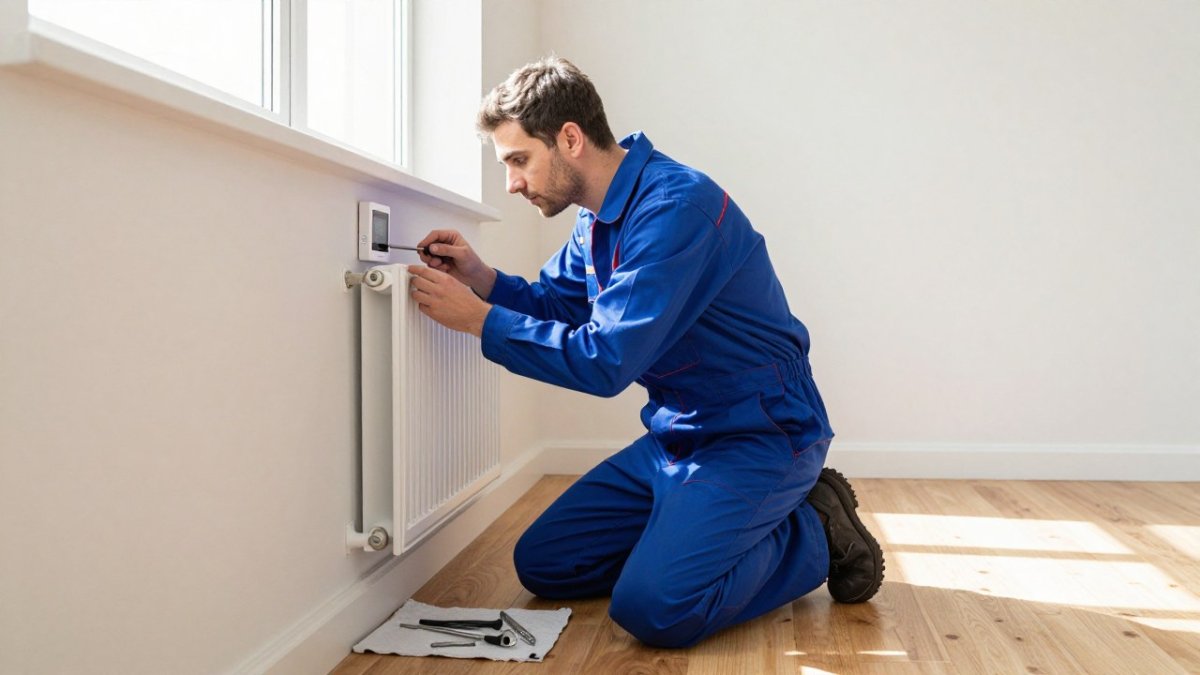
Heating is usually the largest single bill in a rental, and it is also the area where controls give the fastest return. A programmable or smart thermostat lets you set times and temperatures rather than letting the system run flat out, and thermostatic radiator valves (TRVs) let each room call for heat only when it needs it.
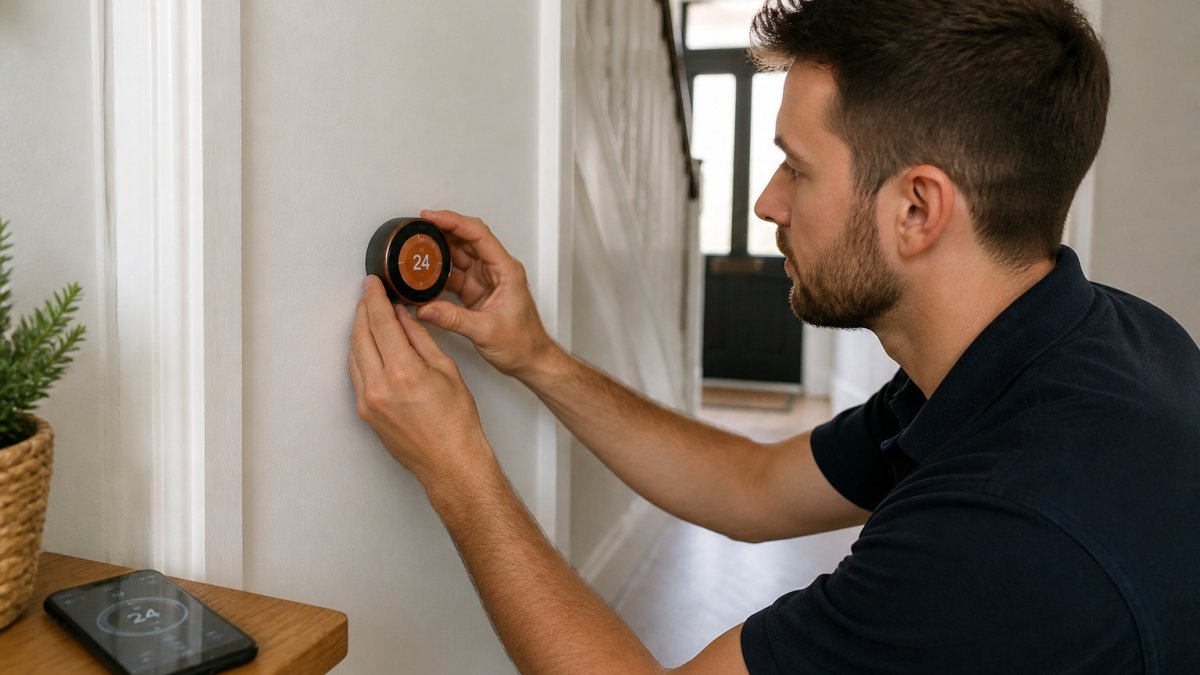
Start with the set-points. A common starting position is 20°C in living areas when occupied, 18°C in bedrooms, and 15-16°C overnight or when the property is empty. Every degree above that adds roughly a few per cent to the heating bill, so a small reduction sustained across the heating season is worth more than a one-off tweak. Set the hot water cylinder thermostat to around 60°C to control legionella risk while avoiding unnecessary overheating.
Match the controls to the system:
- Combi boiler: a smart thermostat with weather compensation or load compensation can modulate the boiler rather than cycling it on and off.
- System or heat-only boiler with a cylinder: zone the heating and hot water separately, and fit a cylinder thermostat plus a timer so hot water is not reheated continuously.
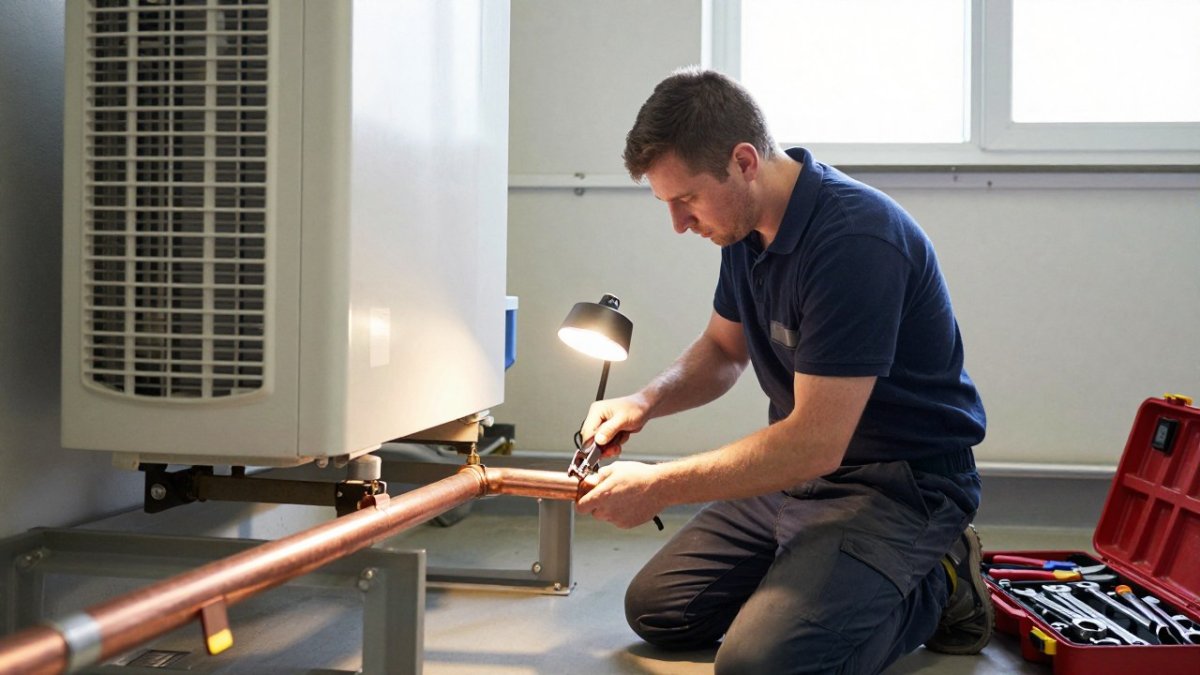
- Heat pump: controls need to run low and slow, with a weather-compensated curve and no overnight setback that forces the system to recover at high output. A smart thermostat designed for boilers may fight a heat pump's efficiency, so check compatibility before buying.
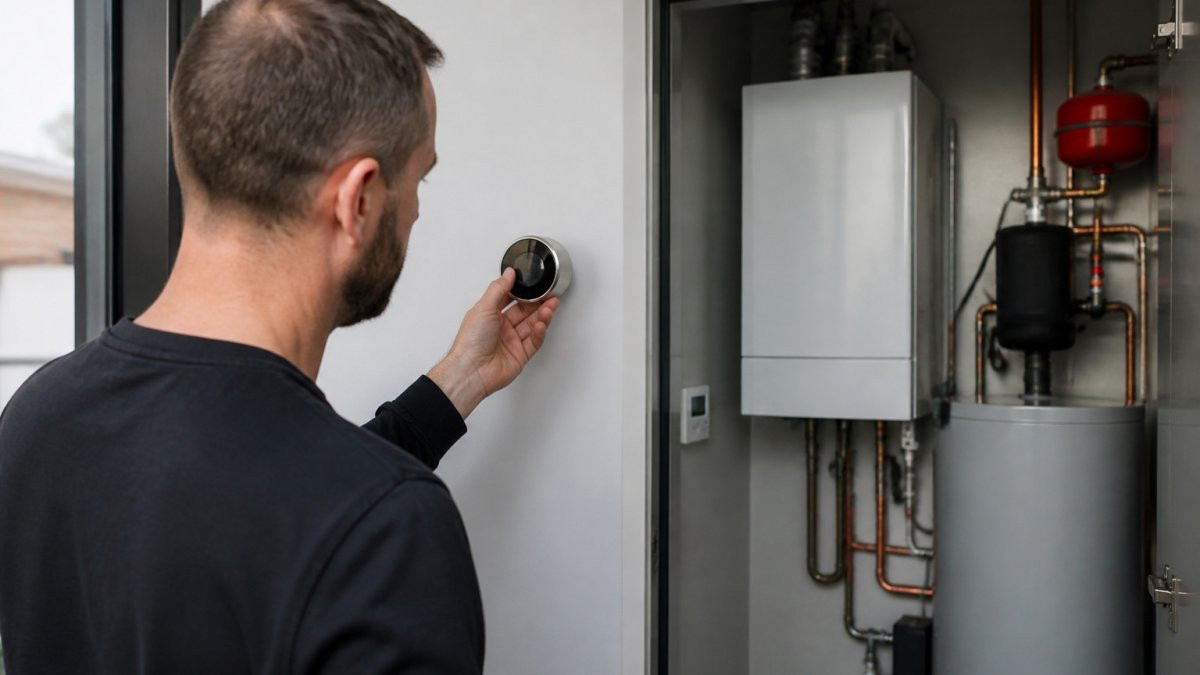
Placement matters as much as the device. Fit the thermostat in the main living area, away from draughts, direct sunlight, radiators and kitchen heat. A thermostat in a hallway next to a draughty front door will read low and overheat the rest of the property.
Heating controls only save money if tenants can use them. Show them how the thermostat works at the start of each tenancy, leave simple written instructions, and set a sensible default schedule so the property is warm when they move in. A common pattern is for tenants to override a schedule they do not understand, which erodes the savings.
Watch out: replacing a boiler thermostat or adding smart controls can affect the boiler's warranty and, on some systems, the way the boiler modulates. Have the controls fitted by a Gas Safe registered engineer or a qualified heating engineer, and keep the commissioning paperwork with the property records.
There is also a compliance dimension. Minimum energy efficiency requirements for privately rented properties apply in the UK, and they change over time. Check the current requirements and EPC position for your property before investing, and confirm the rules that apply in your nation with the relevant official guidance.
The article's heating guidance gives these starting set-points and controls for each system type.
| Item | Value | Note |
|---|---|---|
| Living area set-point (occupied) | 20°C | Common starting position |
| Bedroom set-point | 18°C | Common starting position |
| Overnight or empty set-point | 15-16°C | Common starting position |
| Hot water cylinder thermostat | Around 60°C | Controls legionella risk |
| Combi boiler | Smart thermostat with weather or load compensation | Modulates rather than cycling |
| Heat pump | Low and slow, weather-compensated curve | Check smart thermostat compatibility |
Step 3: Improve Insulation and Cut Draughts
Heat escapes through roofs, walls, windows and gaps around doors. Draught-proofing is often the cheapest fix, and it can make a property feel warmer at a lower thermostat setting.
Start with the quick wins:
- Seal gaps around windows and doors with suitable draught strips
- Check loft insulation depth and top it up where it looks thin
- Fit a letterbox brush and close unused chimney openings
Larger jobs, such as wall insulation or double glazing, cost more but pay back over time. Ask a qualified installer to assess the property before choosing.
Step 4: Upgrade Lighting, Appliances and Water Use
Small changes add up across a whole property. Switching to LED bulbs uses far less electricity than older lamps, and they last much longer.
Appliances can also cut costs:
- Choose energy-efficient fridges, washing machines and dishwashers when replacing them
- Set washing machines to efficient cycles and full loads
- Turn off standby power on appliances that are not in use
Water matters too. Fit low-flow showerheads and aerators on taps, and check hot water settings. A water heater set too hot wastes energy, so keep it at a sensible temperature for safety and efficiency.
Step 5: Calculate Payback Before You Spend
Every upgrade should earn its cost back, but "payback" is only useful if you calculate it consistently and then check it against reality. Most landlords who get this wrong either compare upgrades on sticker price alone or never measure the result, so they cannot tell which measures actually worked.
Use a simple, repeatable calculation for each option:
- Upfront cost, the quoted installation price, including VAT where it applies and any making-good.
- Annual saving, the expected reduction in utility spend, based on your own meter readings where possible rather than a manufacturer's headline figure.
- Payback period, upfront cost divided by annual saving, expressed in years.
- Maintenance and replacement, add the expected annual servicing or replacement cost, and subtract it from the saving before dividing.
A worked example makes the ranking easier to see. Take a simple cost and saving for each measure, divide the upfront cost by the annual saving, and compare the results. Run the numbers for your own property rather than copying a generic order, since the ranking changes with the age of the boiler and the type of glazing.
Rank the list by payback, then adjust for disruption. A measure with a three-year payback that requires emptying the property may still be worth doing between tenancies, while a five-year payback that can be fitted in a day with the tenant in place may be the better first move. Group work so that trades attend once: draught-proofing, loft insulation and TRVs can often be done in a single visit, which cuts labour cost and disruption.
Measuring results is the step most landlords skip. Before any upgrade, record a baseline: three months of meter readings, the utility spend for the same period last year, and a short note from the tenant on comfort. After the upgrade, repeat the same measures over a comparable period, adjusting for season and occupancy. Compare energy use per property and utility spend rather than raw bills, because tariffs change. If the saving is well short of the estimate, check the controls are set correctly, the work was commissioned properly, and the tenant is using the system as intended before assuming the measure failed.
Watch out: manufacturer and installer savings figures are usually based on a typical property and a set of assumptions that may not match yours. Treat them as a ceiling, not a forecast, and use your own readings wherever you have them.
Keep the ranked list, the quotes, the commissioning certificates and the before-and-after readings together in the property file. That record is what lets you repeat what worked across a portfolio and justify the spend when you review rents or refinance.
Landlord Energy-Saving Checklist and Tenant Tips
Use this checklist to track progress:
- Meter readings logged each month for three months
- Billing arrangement confirmed for each utility
- Smart thermostat installed and set to occupancy times
- Draughts sealed around windows and doors
- Loft insulation checked
- LED bulbs fitted throughout
- Hot water temperature set sensibly
- Payback calculated for each planned upgrade
Share simple tips with tenants so they can help save energy:
- Close windows and doors when the heating is on
- Use the thermostat rather than opening windows to cool a room
- Report dripping taps or draughts early, before they waste more energy
Clear communication keeps costs down for everyone. For how comfort improvements link to running costs and tenant satisfaction, read how to improve tenant comfort levels.
Booking a Property Energy Review
If you want a clear plan for your properties, start with a professional review. You can see the range of expert BMS and smart home automation solutions we offer, or review our electrical, plumbing and gas services for upgrades.
To arrange a review, contact our team with your property details and we will confirm the next steps.
Frequently Asked Questions
How can landlords reduce utility costs in rental properties?
Start with the biggest losses: heating, hot water, draughts and lighting. Check meters and confirm who holds each supply so you know which bills you actually control. Fit or upgrade heating controls so heat is delivered only when needed, improve loft and draught-proofing, and switch to LED lighting in common areas. Set a hot water temperature that is safe but not excessive, and fix dripping taps. Compare the cost of each measure against the saving it produces before committing, and prioritise the cheapest measures with the fastest payback.
Who is responsible for utility bills in a rented property?
It depends on the tenancy agreement and the type of tenancy. In many UK lets the tenant pays the gas, electricity, water and council tax, while the landlord covers the building's structure, safety and fixed heating equipment. Some landlords include bills in the rent. Check the agreement and make sure each supply is in the right name, and record meter readings at the start and end of each tenancy so disputes about usage are easier to resolve.
Which heating system changes can help lower energy costs?
The most effective changes are usually controls rather than new boilers. Thermostatic radiator valves and room thermostats stop rooms overheating, and a smart thermostat with zoning lets you heat only occupied areas and schedule heating around tenant routines. Servicing an existing boiler keeps it running efficiently. Replacing an old boiler or adding a heat pump is a larger investment, so work out payback with a cost-benefit check before committing.
Do landlords have to improve a rental property's energy efficiency?
Minimum energy efficiency requirements can apply to privately rented homes in the UK, and they can change over time. Check the current requirement for your property and nation with the relevant local authority or official government guidance. Improving efficiency also reduces tenant bills and supports better tenant retention.