 how-to
Why Integrated Building Services Reduce Delays
Table of Contents
- How Fragmented Trade Coordination Creates Construction Delays
- M&E Coordination: The Foundation of Delay Prevention
- Clash Detection in Construction: Catching Conflicts Before They Cost Time
- Construction Rework Prevention Through Integrated Planning
- Construction Project Delays: What Integrated Services Actually Prevent
- Building Management Systems and Operational Efficiency
- Interdisciplinary Communication: The Hidden Driver of Project Success
- Frequently Asked Questions
Last Updated: October 7, 2026
How Fragmented Trade Coordination Creates Construction Delays
Construction delays rarely happen by accident. Most stem from a single root cause: trades working in isolation. Understanding why integrated building services reduce delays starts with recognizing how fragmentation creates conflict.
When mechanical, electrical, and plumbing contractors operate independently, they make assumptions about space, sequencing, and system placement. Those assumptions often conflict. A plumber installs pipework where the electrician planned to run cable trays. The HVAC team discovers their ductwork won't fit through a structural opening the mechanical engineer didn't account for. By the time anyone notices, weeks of rework stretch ahead.
This fragmentation costs time and money. Site crews wait for clarification. Materials sit idle. Contractors blame each other. Projects slip further behind schedule with each discovery.
Why integrated building services reduce delays starts here: when trades coordinate from day one, conflicts disappear before they reach the site. Design clashes get caught in the model, not on the floor. Installation sequences align. Mechanical, electrical, and plumbing systems fit together by design, not accident.
The difference between a job that finishes on time and one that runs months over often comes down to whether MEP services worked as separate vendors or as a coordinated team. The coordination approach wins every time.
M&E Coordination: The Foundation of Delay Prevention
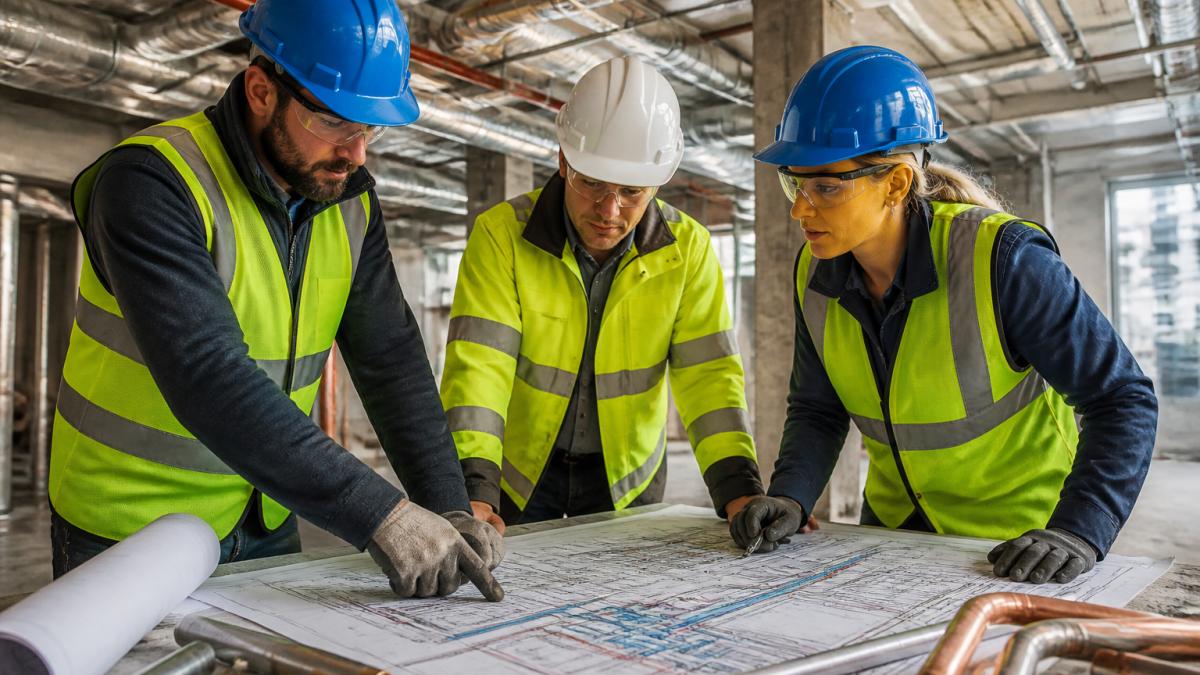
Mechanical, electrical, and plumbing services must align from the design phase forward. This isn't optional refinement, it's the foundation that prevents delays.
When these three trades coordinate properly, several things happen immediately:
- Pipe routes avoid electrical conduit paths
- HVAC ductwork integrates with structural elements rather than fighting them
- Cable trays mount without interfering with mechanical equipment
- Penetrations through walls and floors get planned once, not revised multiple times
The cost of poor communication between trades shows up fast. A single rework cycle on a commercial building can delay the entire project by two to four weeks. Multiply that across multiple trades discovering conflicts at different stages, and delays compound. What started as a one-week slip becomes a two-month setback.
Why Mechanical, Electrical, and Plumbing Services Must Work in Parallel
Sequential trade work, where one trade finishes before the next begins, seems logical on paper. In practice, it creates bottlenecks. The mechanical team can't start rough-in work until electrical confirms cable routes. Electrical can't finalize conduit placement until plumbing confirms pipe runs. Everyone waits.
Parallel coordination changes this entirely. When trades work from a shared model, they see each other's plans in real time. Conflicts surface during coordination meetings, not during installation. Sequencing becomes clear: which systems install first, which follow, where they overlap safely.
Real-time visibility across all trades means site supervisors know what's coming next. Material deliveries align with actual installation schedules. Crews don't arrive to find their work blocked by another trade's equipment. The site runs with rhythm instead of chaos.
The Cost of Poor Communication Between Trades
A single missed coordination point can trigger a cascade of delays. Imagine a mechanical contractor installs a large HVAC unit in a plant room. The electrical team then discovers the unit blocks access to the distribution board they need to service. The unit has to move. New ductwork gets fabricated. New connections get made. Two weeks evaporate.
These scenarios repeat on nearly every fragmented project. The financial impact extends beyond schedule delays. Rework multiplies labour costs. Material waste increases. Equipment sits idle on site. Change orders pile up. Projects can incur significant cost overruns because trades weren't talking to each other.
Integrated coordination eliminates this waste. Conflicts get resolved in the model before anyone orders materials or books labour. Site work flows predictably. Budgets hold.
Clash Detection in Construction: Catching Conflicts Before They Cost Time
Clash detection is the technical engine that prevents delays. It's the process of identifying spatial conflicts between building systems before construction begins.
When mechanical, electrical, and plumbing models merge into a single digital environment, software can automatically flag overlaps. A pipe running through an electrical cable tray. A duct occupying the same space as structural steel. These conflicts appear on screen, not on site.
The alternative, discovering clashes during installation, is expensive. A clash found on site requires stopping work, redesigning the solution, ordering new materials, and rescheduling labour. A clash caught in the model requires a design revision and a coordination meeting. The time difference is measured in weeks versus hours.
Building Information Modelling (BIM) tools like Autodesk Construction Cloud enable this detection automatically. Teams upload their MEP models into a shared environment. The software compares them geometrically and reports every conflict. Mechanical engineers, electrical contractors, and plumbing specialists then meet to resolve each one. By the time construction starts, the design is clash-free.
Projects using integrated clash detection typically experience fewer site surprises and tighter schedules. The upfront coordination effort saves multiples of that time during construction.
Construction Rework Prevention Through Integrated Planning
Rework is the silent killer of project timelines. It's work that should never have been necessary in the first place.
Most rework stems from incomplete coordination. A trade installs something assuming another trade will work around it. That trade arrives and finds the assumption wrong. Now both trades have to redo their work. Time disappears. Frustration builds.
Integrated planning prevents this by establishing clear expectations before work starts. Design documents show exactly how each system integrates with others. Installation sequences are locked in. Responsibility for each coordination point is assigned. When trades follow a coordinated plan, rework becomes rare.
How Unified Design Eliminates Costly Site Corrections
A unified design means every trade works from the same picture of what the finished building looks like. No surprises. No conflicting instructions. No last-minute improvisation.
This requires discipline during the design phase. All trades must participate in design reviews. Mechanical engineers see electrical plans. Electrical contractors review plumbing layouts. Structural engineers confirm that MEP systems fit within the spaces allocated for them. Questions get asked and answered before the first trade arrives on site.
The payoff is substantial. Site supervisors can schedule work with confidence. Material deliveries arrive when needed, not weeks early or late. Crews know what they're installing and where it goes. Quality improves because there's no confusion about intent.
Real-Time Visibility Across All Trades
Modern construction relies on real-time data sharing. When one trade updates their model, everyone else sees it immediately. A plumber relocates a main supply line. The electrician's system alerts them to the change. They adjust their conduit route accordingly. No conflict. No delay.
This visibility extends to the site itself. Mobile tools allow field teams to access current plans, spot issues, and report progress. Site managers know which trades are ready to start, which are waiting, and why. Bottlenecks become visible before they cause delays.
Procore's construction management platform enables this kind of real-time coordination. Teams upload daily progress photos, flag issues, and share updated drawings instantly. The result is faster problem-solving and fewer surprises.
Construction Project Delays: What Integrated Services Actually Prevent
Construction delays fall into predictable categories. Most are preventable through better coordination.
Schedule slippage happens when one trade's work blocks another. Mechanical rough-in can't start until electrical confirms its route. Electrical can't finalize until plumbing confirms its path. Everyone waits. Integrated coordination eliminates these dependencies by planning sequences in advance.
Material delays compound when trades order independently. One contractor orders a piece of equipment without telling others it needs three weeks to arrive. The whole project stalls. Coordinated procurement means all trades order together, aligning delivery dates with actual installation schedules.
Quality rework occurs when trades install work that conflicts with others. Integrated design catches these conflicts before installation starts. Rework becomes unnecessary.
Quantifiable Delay Reduction Through Coordination
Projects using integrated MEP coordination consistently deliver faster than fragmented ones. The improvement varies by project complexity.
This translates directly to cost savings. A commercial project that finishes early saves labour costs, reduces site overhead, and allows the client to occupy the building sooner. For a large development, early completion can represent significant financial benefit.
The mechanism is straightforward: fewer conflicts mean less rework. Less rework means faster progress. Faster progress means earlier completion.
Risk Mitigation in Multi-Trade Environments
Risk in construction projects often comes from unexpected coordination failures. A trade discovers mid-project that their work conflicts with another's. Now decisions must be made under pressure, with incomplete information. Poor decisions follow. Costs rise. Schedules slip.
Integrated planning identifies risks early. Coordination meetings surface potential conflicts while solutions are still flexible. Alternative approaches can be evaluated calmly. The best option gets chosen before work starts, not during crisis management.
This risk mitigation extends to regulatory compliance. Building management systems and safety standards require coordination between trades. Integrated services ensure these requirements are built into the plan from the start, not retrofitted later.
Building Management Systems and Operational Efficiency
Once construction finishes, integrated building services continue delivering value through building management systems (BMS).
A BMS coordinates mechanical, electrical, and plumbing systems to optimise building performance. HVAC systems adjust based on occupancy and weather. Lighting responds to natural daylight. Water systems operate at peak efficiency. Electrical loads balance across circuits.
This coordination requires the same integrated thinking that prevented delays during construction. If mechanical, electrical, and plumbing systems were designed in isolation, the BMS can't optimise them effectively. If they were designed as an integrated whole, the BMS can orchestrate them seamlessly.
BVI Building Services & Controls Ltd integrates BMS design into the construction phase, ensuring that operational efficiency is built in from the start. This approach eliminates the common problem of systems that work individually but conflict when operated together.
Interdisciplinary Communication: The Hidden Driver of Project Success
The most overlooked factor in construction delays is communication. Poor communication between trades creates almost every delay we see.
Effective communication requires structure. Regular coordination meetings where all trades review current plans and discuss upcoming work. Clear documentation of decisions and assumptions. A single source of truth for all project information. Defined responsibility for each coordination point.
When these structures exist, delays become rare. Trades understand each other's constraints. They plan around them. Site work flows predictably.
BIM platforms and project management tools enable this communication. Trimble Connect provides a shared digital environment where all trades access current plans, submit updates, and collaborate on solutions. The platform creates a permanent record of decisions, preventing the "I thought we agreed on that" conflicts that derail projects.
This interdisciplinary approach also improves safety and regulatory compliance. When all trades understand how their work integrates with others, they can identify safety risks early. Compliance requirements get built into plans rather than bolted on later.
Fragmented trade coordination costs time, money, and frustration. Integrated building services eliminate these costs by aligning mechanical, electrical, and plumbing work from design through operation. Conflicts disappear before they reach the site. Rework becomes unnecessary. Schedules hold.
If your construction projects have suffered delays from poor trade coordination, integrated MEP services offer a proven solution. BVI Building Services & Controls Ltd brings mechanical, electrical, plumbing, and building automation expertise together under one roof. We eliminate the complexity of managing separate contractors and deliver seamless, coordinated projects that finish on time and within budget. Contact BVI Building Services & Controls Ltd to discuss how integrated services can transform your next project.
| Coordination Approach | Typical Delay Impact | Primary Cause | Prevention Method |
|---|---|---|---|
| Fragmented trades | 10-20% schedule slip | Design conflicts discovered on site | Integrated BIM clash detection |
| Sequential scheduling | 5-10% schedule slip | Trade dependencies and waiting time | Parallel coordination planning |
| Integrated MEP services | <5% schedule slip | Conflicts resolved in design phase | Real-time visibility and unified planning |
Frequently Asked Questions
How does M&E coordination actually reduce construction delays?
M&E coordination ensures mechanical, electrical, and plumbing services are planned and installed in sequence rather than independently. When these trades work in isolation, conflicts arise on site, pipes clash with ducts, electrical conduits block plumbing runs, forcing costly rework. Integrated coordination identifies these conflicts during design through clash detection, so trades know exactly where and when to install their systems. This eliminates the stop-start pattern that extends timelines by weeks.
What causes clashes between mechanical, electrical, and plumbing services?
Clashes occur when trades design their systems without visibility into others' layouts. A mechanical duct might occupy the same space as an electrical cable tray, or plumbing runs might conflict with HVAC pipework. When discovered on site during installation, these clashes force work to stop while designs are modified. Integrated building services use BIM and clash detection software to identify and resolve these conflicts before construction begins, preventing delays and rework.
How much can integrated building services reduce project timelines?
Delay reduction depends on project complexity and initial coordination gaps. Platforms like BIM 360 have demonstrated average delay reductions of 30% on large-scale projects through automated clash detection and real-time MEP coordination. Smaller projects typically see 10-20% time savings. The primary gains come from eliminating rework cycles, reducing site conflicts, and shortening the approval cycle for design changes. Exact figures vary based on project size, trade complexity, and existing communication gaps.
When should building services coordination begin on a project?
Coordination must start at the design phase, not during construction. Once trades begin work on site, conflicts become expensive to resolve. Early coordination, involving mechanical, electrical, plumbing, and structural teams from concept through detailed design, identifies spatial conflicts, sequencing issues, and system interoperability problems before they reach the site. This front-loaded effort prevents the cascading delays that occur when trades discover conflicts during installation.