 How-to
Reduce Commercial Building Energy Costs: 7 Steps for 2026
Table of Contents
- Step 1: Conduct a Commercial Energy Audit to Identify Waste
- Step 2: Upgrade to LED Lighting and Control Systems
- Step 3: Optimise Commercial HVAC Energy Savings
- Step 4: Install a Building Management System for Energy Savings
- Step 5: Deploy Commercial Solar Panels and Energy Costs Reduction
- Step 6: Negotiate Energy Procurement and Tariff Strategies
- Step 7: Embed Operational Changes and Staff Practices
- Measuring Results: Energy Baseline and KPI Framework
- Frequently Asked Questions
Last Updated: October 12, 2026
Step 1: Conduct a Commercial Energy Audit to Identify Waste
A commercial energy audit is the process of systematically measuring and analyzing how much energy your building uses, where it goes, and where you're wasting money. This is your starting point for reducing commercial building energy costs.
Without an audit, you're guessing. You don't know which systems drain the most power, which areas run inefficiently, or where quick wins exist. An audit gives you the data.
Here's what a commercial energy audit reveals:
- Which equipment consumes the most electricity
- Where heat escapes through walls, roofs, or doors
- Lighting that stays on when spaces are empty
- HVAC systems cycling inefficiently
- Outdated machinery running 24/7 without reason
Start with a walkthrough. Document operating schedules, equipment age, recent utility bills, and tenant complaints about comfort. This takes a day and costs nothing.
Next, measure. Use thermal imaging cameras to spot heat loss. Check meter readings at different times. Record temperatures in occupied and unoccupied spaces. Look for equipment that runs constantly.
Then analyze. Compare your consumption to similar buildings. Identify the top three energy drains. Calculate how much each one costs annually.
The audit doesn't need to be expensive. Many energy consultants offer basic audits for a fixed fee. Some utilities provide free or subsidised audits. The data you get pays for itself in weeks.
Step 2: Upgrade to LED Lighting and Control Systems
LED lighting upgrades are often the fastest way to cut energy costs. LED bulbs use 75% less energy than incandescent lights and last 25 times longer.
But the real savings come from controls, not just the bulbs.
A standard LED retrofit swaps old lights for new ones. You save energy immediately. But if lights stay on in empty spaces, you're still wasting money.
Add occupancy sensors and daylight harvesting. Sensors turn lights off when rooms are unoccupied. Daylight harvesting dims artificial lights when natural light is sufficient. Together, they cut lighting energy use by another 30-50%.
Here's how to approach it:
- Audit your lighting first. Map which areas use the most light. Identify spaces that are frequently empty (storage rooms, conference rooms after hours, stairwells).
- Replace high-use areas with LED + sensors. Start with corridors, restrooms, and storage areas where occupancy is unpredictable.
- Add daylight harvesting in perimeter zones. Offices near windows benefit most.
- Install centralised controls. A building management system ties all lights together. You can adjust schedules, override manually, and monitor consumption in real time.
Most commercial buildings see payback within 2-4 years. Some see it within 18 months if they upgrade high-use areas first.
Step 3: Optimise Commercial HVAC Energy Savings
Heating, ventilation, and air conditioning accounts for 40-50% of energy use in most commercial buildings. Optimising HVAC is essential for reducing commercial building energy costs.
The problem: most HVAC systems run on fixed schedules. They heat or cool the entire building even when only one zone is occupied.
Start with scheduling. Set your HVAC to match occupancy. If your building is empty on weekends, the system shouldn't run full strength.
Next, check your thermostat settings. Lowering heating by just 2 degrees saves roughly 10% of heating energy. Raising cooling by 2 degrees saves 10% of cooling energy. These small adjustments compound across the year.
Then maintain your equipment. Dirty filters force the system to work harder. Clean coils improve efficiency. Leaking ducts waste conditioned air. A professional HVAC technician can identify these issues quickly.
Consider upgrading to a variable frequency drive (VFD). VFDs adjust fan and pump speeds based on demand. Instead of running at full power constantly, the system ramps up or down. This cuts energy use by 20-40%.
Key steps for HVAC optimisation:
- Set schedules that match occupancy patterns
- Adjust thermostat setpoints by 2-3 degrees
- Replace dirty filters monthly
- Seal leaking ducts
- Service equipment annually
- Install VFDs on fans and pumps
Step 4: Install a Building Management System for Energy Savings
A building management system (BMS) is software and hardware that monitors and controls all building systems from one dashboard. It's the nervous system of your building.
Without a BMS, you manage lighting, HVAC, and other systems independently. You can't see the big picture. With a BMS, you see real-time energy consumption, equipment status, and occupancy patterns. You can automate responses and catch problems before they become expensive.
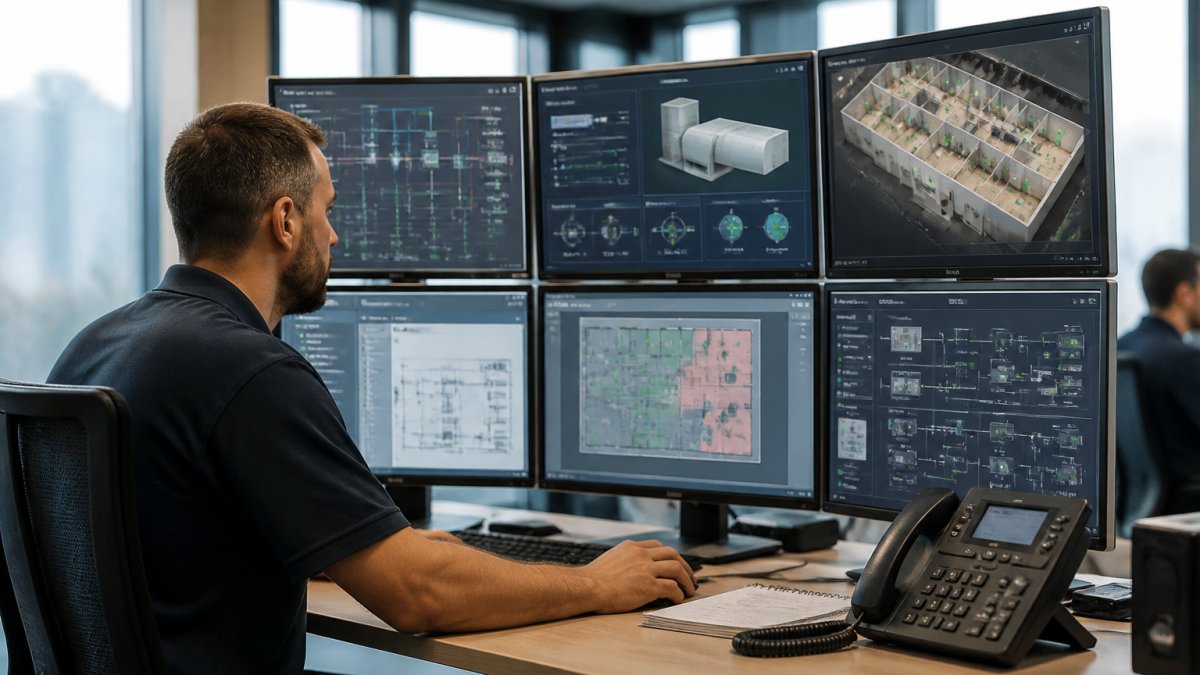
A BMS does several things:
- Monitors consumption. Tracks electricity, gas, water use by zone or system. You see where energy goes.
- Automates controls. Adjusts HVAC, lighting, and equipment based on occupancy, time of day, and weather.
- Alerts you to faults. Flags equipment running inefficiently, filters overdue for cleaning, or systems malfunctioning.
- Logs data. Records historical trends. You spot seasonal patterns and measure the impact of upgrades.
Most commercial buildings benefit from a BMS within 3-5 years through energy savings alone. Larger buildings often see payback faster.
A properly commissioned BMS prevents the coordination chaos that derails many projects. When electrical, HVAC, and controls teams work separately, conflicts arise. Integration eliminates that friction.
Start with a BMS that covers your major energy consumers: HVAC, lighting, and hot water. You can expand later.
Step 5: Deploy Commercial Solar Panels and Energy Costs Reduction
Commercial solar reduces your grid electricity consumption and locks in lower energy costs for decades.
Solar works best if your building has:
- South-facing roof or wall space
- Minimal shading from trees or nearby buildings
- Structural capacity for panels (most commercial roofs handle it)
- Sufficient daytime occupancy to use the power generated
A 50 kW solar array on a commercial roof typically generates 40,000-50,000 kWh per year, depending on location and shading. That covers 30-50% of typical commercial electricity use.
Here's the financial picture: solar costs have fallen 70% in the past decade. Installation costs roughly £1.50-£2.50 per watt. A 50 kW system costs £75,000-£125,000 before incentives.
You can offset this through:
- Tax allowances on capital equipment
- Reduced grid electricity bills
- Possible export of excess power back to the grid
Most commercial solar installations pay for themselves in 6-10 years. After that, electricity is nearly free.
Consider pairing solar with battery storage. Batteries store excess daytime power for use at night or during peak-rate hours. This further reduces grid dependence and smooths your energy costs.
Step 6: Negotiate Energy Procurement and Tariff Strategies
Your energy tariff matters as much as your consumption. Many businesses overpay because they don't actively manage their contracts.
Commercial energy rates vary by:
- Time of use (peak vs. off-peak)
- Demand charges (the highest 30-minute usage spike in a month)
- Contract length and market timing
- Non-commodity charges (grid fees, distribution costs)
Here's how to optimise:
Review your bills first. Demand charges often surprise facility managers. If your peak usage spikes to 100 kW for even 30 minutes, you pay peak rates for the entire month. Flattening demand saves money immediately.
Shift usage away from peak times. Run energy-intensive processes (cleaning, maintenance, data backups) during off-peak hours. Delay HVAC ramp-up until after peak pricing ends.
Lock in rates when prices are low. Energy markets fluctuate. If forecasts predict price rises, a longer contract protects you. If prices are high, shorter terms let you renegotiate sooner.
Bundle services. Combining electricity, gas, and water contracts often earns volume discounts.
Audit non-commodity charges. These hidden fees can add 20-30% to your bill. Negotiate them directly with suppliers.
Most businesses save 10-15% by switching suppliers or renegotiating terms. Some save more by shifting usage patterns.
Step 7: Embed Operational Changes and Staff Practices
Technology cuts energy use, but behaviour matters too. A well-designed building with careless occupants still wastes energy.
Train staff on simple habits:
- Close doors to unoccupied spaces
- Turn off equipment at the end of the day
- Report maintenance issues (leaking taps, malfunctioning thermostats, broken door seals)
- Use natural light when possible
- Dress appropriately for the season (fewer requests to adjust temperature)
Post reminders near light switches and thermostats. Make energy-saving visible and easy.
Create accountability. Assign one person to monitor energy dashboards and alert managers to unusual consumption. Make energy performance a KPI in facility team reviews.
Seasonal adjustments matter too. In winter, close blinds at night to retain heat. In summer, open them early to block solar gain. These cost nothing but save energy.
Tenant engagement is critical in multi-tenant buildings. Educate tenants about how their behaviour affects shared costs. Some landlords offer incentives for meeting consumption targets.
Measuring Results: Energy Baseline and KPI Framework
You can't manage what you don't measure. Establish a baseline and track progress.
| Metric | How to Measure | Target Frequency |
|---|---|---|
| Total energy consumption (kWh) | Read meters monthly | Monthly |
| Peak demand (kW) | Check billing statements | Monthly |
| Energy cost per square metre | Divide annual cost by building area | Quarterly |
| Equipment runtime hours | BMS logs or manual counts | Weekly |
| Temperature variance (comfort complaint indicator) | Sensor data or staff feedback | Daily |
| Renewable energy generated (if applicable) | Solar monitoring app or inverter display | Daily |
Set a baseline before making changes. After upgrades, compare consumption to the baseline. Calculate payback periods for each investment.
Key performance indicators to track:
- Energy intensity: kWh per square metre per year. This normalises for building size.
- Demand reduction: Peak kW usage. Flatter demand lowers rates.
- Cost per kWh: Tracks both consumption and tariff changes.
- Carbon emissions: kg CO₂ per year. Increasingly important for ESG reporting.
Most improvements take 3-6 months to show full effect. Don't judge success after two weeks.
Proper commissioning ensures your BMS captures accurate readings from day one.
Review results quarterly. Share wins with staff and tenants. Celebrate milestones. Energy saving is a marathon, not a sprint.
Reducing commercial building energy costs in 2026 requires a structured approach: audit first, upgrade systems strategically, automate controls, and embed operational discipline.
The most common mistake is treating each system separately. Lighting, HVAC, controls, and solar work best together. When they're coordinated, savings multiply.
At BVI Building Services & Controls Ltd, we integrate these elements seamlessly. Our multi-trade approach eliminates coordination delays and cost overruns.
Get started with an energy audit. Within weeks, you'll have a clear roadmap. Within months, your first upgrades will be live.
Frequently Asked Questions
How much can a commercial building realistically reduce energy costs?
Savings depend on current energy consumption, building type, and which measures you implement. A commercial energy audit typically identifies 15-30% reduction potential through a combination of lighting, HVAC, controls, and operational changes. Solar and heat pump upgrades can deliver additional savings. The payback period for most upgrades ranges from 3 to 7 years, depending on capital costs and energy tariffs.
What is included in a commercial energy audit?
A commercial energy audit examines your building's energy consumption patterns, identifies waste in lighting, heating, cooling, and building systems, and recommends prioritised upgrades. The audit typically includes utility bill analysis, on-site inspections, equipment testing, and a report ranking measures by cost and payback. Most audits take 1-3 days depending on building size and complexity.
How does a building management system reduce energy bills?
A building management system monitors and controls HVAC, lighting, and other equipment in real time. It automates scheduling (heating/cooling only when needed), detects equipment faults before they waste energy, and optimises system performance based on occupancy and weather. Smart controls typically reduce energy consumption by 10-20% compared to manual operation.
Are commercial solar panels worth the investment in 2026?
Commercial solar panels can offset 20-50% of electricity consumption depending on roof space and sun exposure. Combined with battery storage, they improve energy resilience and reduce grid reliance. Payback periods typically range from 5 to 10 years. Government incentives and business energy tax relief may improve financial returns. An energy audit should include a solar feasibility assessment tailored to your building type and operating schedule.