 Comparison
What are the best alternatives to Elite Engineering for smart homes?
Last Updated: October 25, 2026
Quick Summary
Smart home alternatives to Elite Engineering prioritize seamless coordination across electrical, HVAC, plumbing, security, and renewable energy systems rather than locking you into a single platform. BVI Building Services & Controls Ltd exemplifies this approach, combining multi-trade expertise with genuine system integration to eliminate communication failures and reduce total cost of ownership.
- Integrated systems reduce installation complexity, shorten timelines, and lower total cost of ownership by eliminating delays from coordinating multiple independent contractors.
- Ask providers about design capability, multi-trade coordination, system compatibility, cybersecurity, and long-term support using a consistent six-criterion scorecard.
- Professional installation is essential for critical infrastructure like HVAC, electrical, and security to ensure compliance with building regulations and warranty coverage.
- Compare five-year total costs including design, installation, hardware, subscriptions, service agreements, and device replacement rather than headline installation figures alone.
- Regular maintenance including monthly firmware updates, quarterly sensor calibration, and annual professional inspections prevents performance degradation and security vulnerabilities.
Table of Contents
- Why consider smart home alternatives to Elite Engineering
- What integrated smart home systems offer beyond single-vendor solutions
- Comparing smart home automation companies: key criteria
- Smart home system installation: professional versus DIY approaches
- Smart home security system maintenance checklist for ongoing performance
- Cost, support, and long-term reliability considerations
- Planning your smart home automation upgrade
- Frequently Asked Questions
Why consider smart home alternatives to Elite Engineering
When evaluating smart home automation companies, the instinct is to default to the most established name. But that often locks you into inflexible systems, limited interoperability, and vendor dependency that costs more over time.
The best smart home alternatives share one critical characteristic: they prioritize seamless coordination across electrical, HVAC, plumbing, security, and renewable energy systems rather than locking you into a single platform.
What integrated smart home systems offer beyond single-vendor solutions
Integrated smart home systems aren't about bundling services under one roof. They eliminate the communication failures that occur when separate contractors work in isolation. Integrated versus fragmented building services shows the concrete advantages of coordinated approaches over single-vendor solutions.
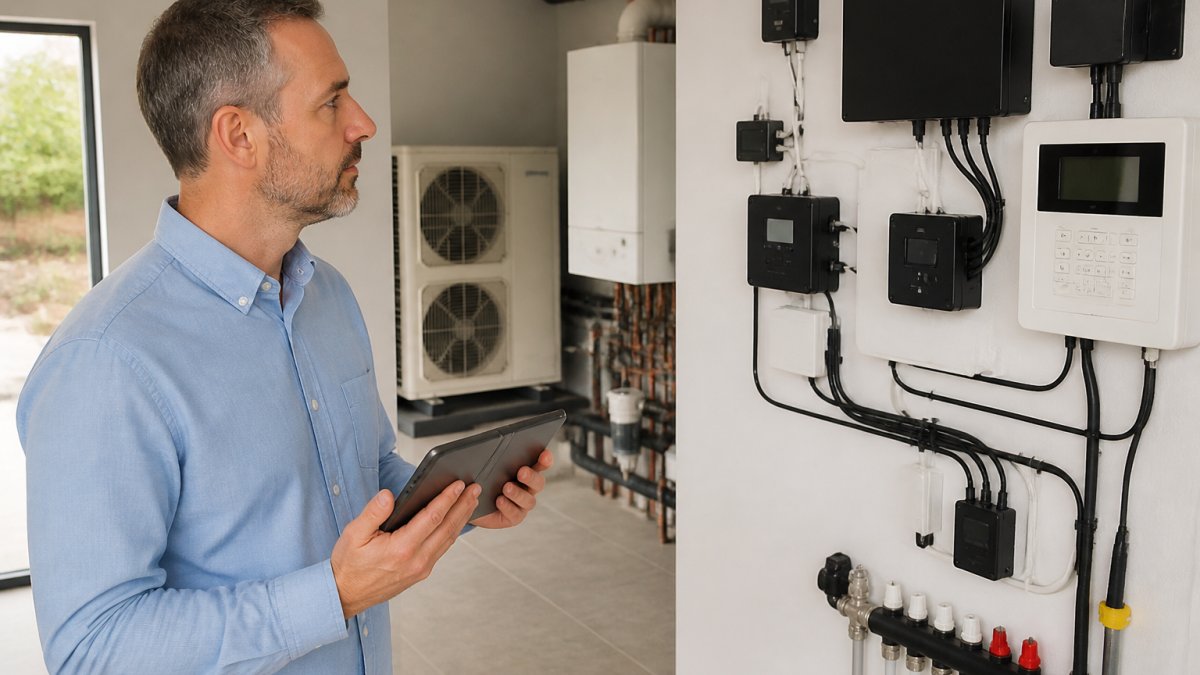
Single-vendor platforms often promise this integration but deliver it only within their own ecosystem. The moment you add a device from another manufacturer or integrate an existing system, you hit a wall.
The practical benefit is significant: integrated systems reduce installation complexity, shorten timelines, and lower total cost of ownership by eliminating the delays and cost overruns of coordinating multiple independent contractors.
Comparing smart home automation companies: key criteria
Most smart home explainers tell you what a connected home can do, not how to compare the companies that design and install one. Use the six criteria below as a scorecard for any provider, including Elite Engineering and the alternatives you're weighing against it.
Ask every provider the same questions and record the answers in writing. The provider that gives specific, verifiable answers rather than marketing language is usually the safer choice.
1. Service area and site attendance
Ask where the provider's engineers are based, how far they travel, and the committed response time for a site visit. A firm covering your region directly usually attends faster than one that subcontracts. Get the attendance window in the contract, not just the sales conversation.
2. Design capability and multi-trade coordination
The key differentiator is whether the provider genuinely coordinates electrical, heating, ventilation, plumbing, security, and renewable energy work, or simply brokers separate contractors. Ask:
- Who produces the system design, and is it issued before installation starts?
- Are the electrical, HVAC, and security designs produced by the same team or by separate firms?
- Who is the single point of accountability if one trade's work prevents another's from functioning?
A provider with in-house multi-trade expertise, such as BVI Building Services & Controls Ltd, can answer these directly. A broker will usually defer to its subcontractors.
3. Installation and commissioning
Ask what commissioning involves: point-by-point testing of sensors and controls, documented handover, and user training. A proper handover pack should include as-built drawings, device schedules, network details, and warranty terms. If a provider can't describe its commissioning process, it probably doesn't have one.
4. System compatibility and lock-in
This is where many single-vendor platforms fail. Ask which protocols the system supports (for example, wired bus systems, Zigbee, Z-Wave, Matter, or IP-based controls), whether devices from other manufacturers can be added later, and who owns the accounts and data. A system that only accepts the provider's own hardware creates switching costs that are expensive to escape.
5. Cybersecurity and data handling
Ask where data is stored (on-site, UK-hosted cloud, or overseas), who can access it, how updates are delivered, and what happens to your data if you change provider. Providers operating under UK data protection law should explain their arrangements in plain terms. Open platforms can be secure, but only if someone is responsible for patching and configuration.
6. Support, warranties, and long-term service
Ask for the warranty period on labour and on hardware, the support hours, the fault-response commitment, and whether maintenance is included or charged separately. Compare the total support commitment over five years, not just the first-year price.
How the main alternatives typically score
- Elite Engineering and similar single-vendor integrators: strong on coordinated design and accountability, but often weaker on interoperability and switching costs. Confirm protocol support and account ownership before committing.
- BVI Building Services & Controls Ltd: designed around multi-trade coordination with in-house electrical, HVAC, plumbing, gas, air conditioning, and renewable energy expertise, which addresses the coordination and accountability criteria directly.
- High-end platforms such as Savant, Crestron, and Control4: excellent user experience and premium support, but proprietary installation and support models mean higher switching costs and ongoing service contracts.
No single option wins on every criterion. The right choice depends on which criteria matter most for your property, which is why the scorecard approach beats a generic recommendation.
Smart home system installation: professional versus DIY approaches
The choice between professional installation and DIY hinges on technical complexity, ongoing support requirements, and your tolerance for troubleshooting.
Professional installation through firms like BVI Building Services & Controls Ltd makes sense when your system touches critical infrastructure: HVAC, electrical, security, or renewable energy. How to choose a home automation installer provides guidance on selecting the right professional for your smart home project.
DIY platforms like Home Assistant appeal to technically proficient homeowners who want flexibility and lower upfront costs.
For most property owners and facility managers, hybrid approaches work best: professional installation for critical infrastructure and high-complexity integrations, open platforms or semi-managed services for non-critical devices and future expansions.
UK Building Regulations guidance on electrical and HVAC systems specifies that certain building automation work must be carried out by competent persons.
Smart home security system maintenance checklist for ongoing performance
A smart home system doesn't maintain itself. Regular maintenance prevents performance degradation, security vulnerabilities, and unexpected failures.
| Maintenance Task | Frequency | Why It Matters |
|---|---|---|
| Security software and firmware updates | Monthly | Patches vulnerabilities; prevents unauthorised access |
| Sensor calibration and testing | Quarterly | Ensures accurate temperature, occupancy, and security readings |
| Network connectivity verification | Monthly | Confirms all devices remain connected and responsive |
| Access control audit | Quarterly | Reviews who has system access; removes old credentials |
| Backup system verification | Semi-annually | Ensures data recovery is possible if system fails |
| Professional system inspection | Annually | Identifies wear, misconfiguration, or emerging issues |
Professional firms like BVI Building Services & Controls Ltd typically include maintenance as part of their service agreements. Home Assistant and open-platform users must handle this themselves or hire technical support.
Cost, support, and long-term reliability considerations
Pricing is where smart home articles are least useful, because most avoid numbers. This section doesn't invent figures, but explains the cost drivers, fee structures, and questions that let you compare quotes like-for-like.
What drives the cost of a smart home project
Project cost is driven by scope and complexity rather than by brand alone. The main drivers are:
- Number and type of controlled systems: lighting, heating and cooling, security, access control, blinds, audio, and renewable energy each add design and commissioning work.
- Wired versus wireless: wired bus systems need cabling, containment, and first-fix work during a build or refurbishment, which adds labour but usually improves reliability. Wireless retrofit is faster to install but depends on network quality and battery maintenance.
- Property size and construction: solid walls, listed status, and multiple floors increase cabling and commissioning time.
How providers structure their fees
Ask every provider to separate the quote into these lines so you can compare them:
- Design fee: a one-off charge for survey, system design, and drawings. Some providers credit this against the installation if you proceed.
- Installation and commissioning: labour and hardware, usually the largest line.
- Hardware and licences: device costs plus any software licences or platform subscriptions.
- Support and maintenance: either included for a fixed period or charged as an annual service agreement.
- Call-out and fault-response charges: the hourly rate and minimum charge for attendance outside the warranty.
A quote that omits design, commissioning, or support is not cheaper; it has simply moved those costs to later.
Ongoing fees to check
- Subscription fees: some platforms charge monthly or annual fees for remote access, cloud storage, or premium features. Confirm what happens if you stop paying.
- Service agreements: annual maintenance contracts typically cover inspections, firmware management, and priority response. Ask what is included and what is chargeable.
- Cellular or connectivity costs: systems with their own SIM or connectivity plan carry a recurring charge.
Support and reliability: what to put in the contract
Reliability is a contractual matter as much as a technical one. Insist on:
- A defined warranty period for labour and for hardware, stated separately.
- A fault-response commitment, with a target attendance time for critical systems such as heating, security, and access control.
- A named contact and escalation route.
Comparing the main options on cost and support
- Elite Engineering and similar single-vendor integrators: typically quote design, installation, and an ongoing service agreement as a package. The advantage is accountability; the risk is that expansion and support are priced at a premium once you are committed.
- BVI Building Services & Controls Ltd: positions ongoing support and proactive maintenance as part of the service, which reduces the risk of emergency call-out charges but means the support cost is built into the agreement rather than optional.
- High-end platforms such as Savant, Crestron, and Control4: premium hardware and mandatory dealer support mean higher annual costs, but the user experience and support infrastructure are mature.
The reliability question comes down to accountability. A managed service carries the responsibility for fixing faults; a DIY or semi-managed platform places that responsibility on you. Budget for the level of support you actually need, and get the commitment in writing before you sign.
Planning your smart home automation upgrade
If you're ready to move beyond Elite Engineering or evaluate alternatives for the first time, start by clarifying what you need: Are you upgrading an existing system or building from scratch?
You can explore smart home automation solutions and services designed for efficiency, comfort, and innovation to see how integrated approaches differ from single-vendor models. For properties with multiple systems already in place, understanding why multi-trade coordination matters helps you evaluate whether fragmentation is costing you money and reliability.
If you're evaluating alternatives seriously, contact BVI Building Services & Controls Ltd to discuss your specific needs. The firm's integrated smart home automation, combining electrical, HVAC, plumbing, renewable energy, and security expertise, eliminates the coordination failures that plague fragmented projects.
Frequently Asked Questions
What should I compare when choosing a smart home automation company?
Prioritise multi-trade coordination capability, whether the provider handles electrical, plumbing, HVAC, and security integration rather than acting as a single-discipline vendor. Evaluate interoperability: can the system work with devices and platforms beyond the provider's own ecosystem, or does it lock you into proprietary hardware? Check cybersecurity credentials and data protection practices. Compare installation timelines, warranty coverage, and ongoing maintenance support. Ask whether existing maintenance teams can handle repairs or if you're dependent on the original provider. Request case studies from similar properties to verify energy savings and comfort outcomes.
How does professional smart home system installation differ from DIY approaches?
Professional installation ensures proper sensor calibration, HVAC scheduling, and integration across multiple building systems, critical for achieving the comfort and energy efficiency gains you're paying for. Professionals handle complex wiring, system configuration, and compliance with building regulations. DIY setups work well for simple device coordination but struggle with seamless automation across heating, lighting, and security. Professional teams also provide ongoing support and can troubleshoot issues that DIY users cannot resolve independently. For commercial properties or multi-unit residential buildings, professional installation is essential to avoid delays, budget overruns, and system reliability problems.
What does a smart home security system maintenance checklist include?
Check sensor batteries monthly and replace as needed. Test all door and window sensors quarterly to confirm they trigger alerts reliably. Review access logs and user permissions every three months to identify unauthorised changes. Inspect camera lenses for dirt or damage monthly. Verify that automation rules are still functioning, test voice commands and remote app access. Update firmware on all connected devices when manufacturers release patches. Confirm that backup power systems are operational. Conduct a full system test twice yearly to catch compatibility issues before they cause problems. Document all maintenance activities to support warranty claims and identify recurring issues.
Can integrated smart home systems really reduce energy bills?
Yes, when properly designed and calibrated. Integrated systems optimise heating and cooling schedules based on occupancy patterns, time of day, and weather forecasts. Smart lighting that responds to daylight and occupancy further reduces consumption. Heat pump integration with thermal storage and solar generation can lower heating costs significantly. Results depend on the property's existing infrastructure, occupant behaviour, and how carefully the system is commissioned. Request case studies from similar properties in your area and ask for transparent energy monitoring data before committing. Poor calibration or user behaviour can eliminate these gains, so ongoing maintenance and staff training matter.
Why choose a multi-trade provider over separate electrical, plumbing, and HVAC contractors?
Fragmented trade coordination is the leading cause of budget overruns and project delays, contractors often don't communicate, leading to rework and conflicting schedules. A multi-trade provider ensures that electrical runs, plumbing routes, and HVAC ducting are planned together, avoiding costly conflicts. They take responsibility for the entire project rather than leaving you to mediate disputes between vendors. Sensor calibration and automation logic work correctly only when all systems are integrated from the start, not bolted together afterward. You get a single point of contact for warranties, support, and troubleshooting. For complex properties, especially new builds or major renovations, this coordination eliminates the cost overruns typical of multi-vendor projects.